Northern Watersnake
Identification
The most-killed snake in Tennessee, and the reason is a name that belongs to a species three counties west. Every cottonmouth report out of the Harpeth is a watersnake until someone produces a photograph that says otherwise.
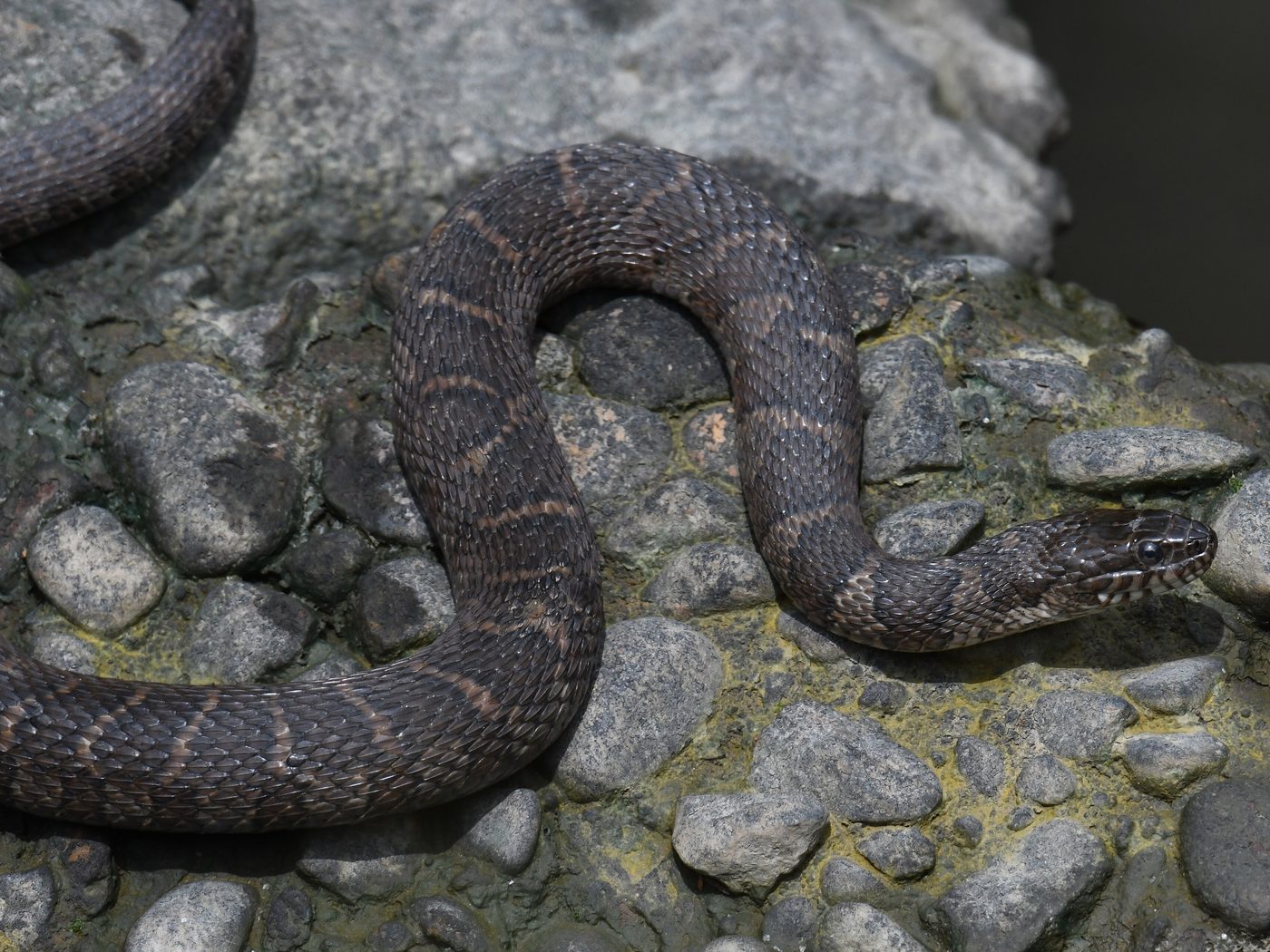
A cornered watersnake flattens its head into a broad triangle and strikes. That performance is the whole reason this species dies in numbers: it does a convincing impression of a snake it is not closely related to and does not live near.
Where to expect it.
Every water body in the county, and it is the default snake on all of them.
Active Season
Charted from this species’ own research-grade records inside Williamson County.
What it gets mistaken for.
This is the misidentification that costs lives, on both sides. People kill watersnakes believing they are cottonmouths, and people get bitten reaching for cottonmouths believing they are watersnakes.
Start with range: TWRA maps the cottonmouth to West Tennessee and the northern Highland Rim, and Williamson County is in neither. Then the animal: a cottonmouth has a facial pit between eye and nostril, a broad dark band from snout through eye onto the neck, and it rides high on the water with most of the body visible. A watersnake swims low, with little more than the head above the surface.
Band geometry again. The watersnake's dark markings are narrow at the sides and wide across the spine. The copperhead's are the exact reverse. A copperhead is also a dry-hillside animal, not a swimmer.
The queensnake is slim and striped, with a cream stripe low on each side. The watersnake is heavy and banded. If it is thick enough to look like a problem, it is the watersnake.
When you meet one.
It wants the water. Every watersnake encounter that is left alone ends the same way, with a splash.
Stop walking.
Give it a clear line to the water and it takes it. Cornering it against a rock face is what produces a strike.
Do not sweep it off.
A snake knocked into a swimmer is a worse outcome than a snake left basking. Wait, or nudge it with a long pole from behind.
It has no venom.
The bite bleeds more than it should because watersnake saliva thins blood. Wash it, press it, watch it like any puncture wound.
Photograph the head.
One clear photograph of the side of the head settles pit viper or not for good. Take it from six feet away.
Pack it. Print it. Pass it on.
Most snakes killed in Williamson County are killed by someone who could not name them. Send this to anyone who gardens, hikes, keeps a woodpile, walks a dog off the greenway, or has a teenager who reaches into things. That is most of the county.
Sources
Medical disclaimer. This field guide is general educational information, not medical advice, and is no substitute for professional diagnosis or treatment. Any bite from a copperhead or a timber rattlesnake is a medical emergency: go to an emergency department, and call the Tennessee Poison Center at 1-800-222-1222 on the way. In an emergency, call 911. Identification disclaimer. No photograph identifies a snake with certainty, and this guide will not make anyone a herpetologist. When the answer matters, keep your distance and send a photograph to someone who does this for a living.