Queensnake
Identification
A slender creek snake that eats almost nothing but crayfish, and only crayfish that have just moulted. Thirty county records is a strong showing for an animal this specialized.
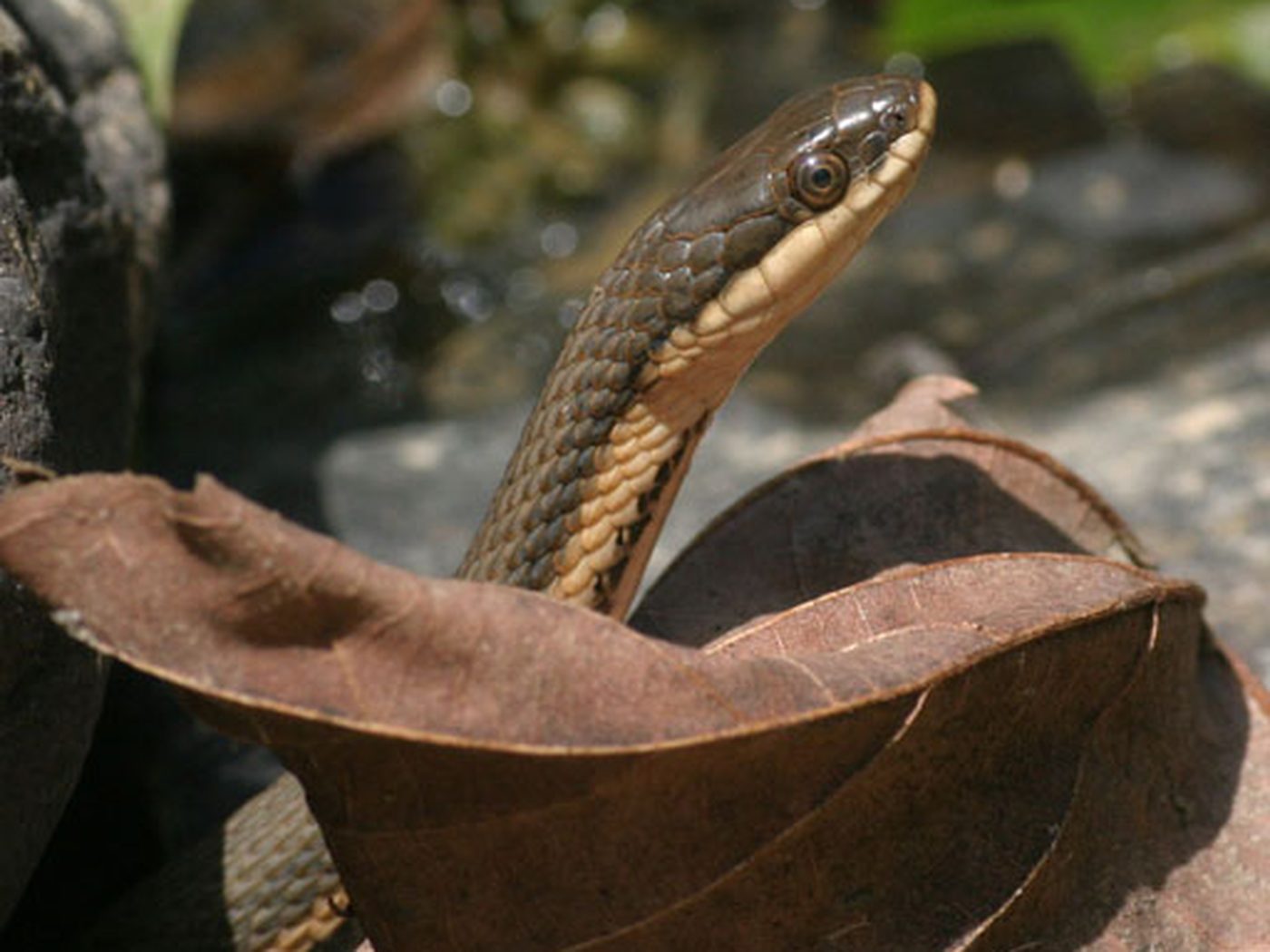
This is the one snake on the list that works as a water-quality gauge. Siltation and channelisation kill crayfish, and a creek that loses its crayfish loses its queensnakes within a season or two. A stretch of the Harpeth with queensnakes on it is a stretch that is still working.
Where to expect it.
Cool, rocky creeks with clean gravel bottoms. TWRA places the species in Middle and East Tennessee.
Active Season
Charted from this species’ own research-grade records inside Williamson County.
What it gets mistaken for.
It shares a creek with the watersnake and gets counted as one, which matters because the watersnake gets counted as a cottonmouth.
The queensnake is slim and striped; the watersnake is heavy and banded. If the snake looks thick enough to be a problem, it is not this one.
A gartersnake has a light stripe down the center of its back. The queensnake does not; its stripes are low on the sides and on the belly.
When you meet one.
It drops into the water and is gone. Queensnakes do not hold ground and do not bluff.
Put the rock back.
Flipping creek rock is how most people meet this species. Set each one back the way it was; that rock is somebody's whole habitat.
Watch from the bank.
A basking queensnake will stay put if you stop moving. It is the easiest snake here to observe honestly.
Release upstream.
Let it go where you found it, not at the car park. Crayfish density is why it was there.
That is data.
A creek that loses its queensnakes has usually lost its crayfish first. Report the stretch, with a date, to the Harpeth Conservancy.
Pack it. Print it. Pass it on.
Most snakes killed in Williamson County are killed by someone who could not name them. Send this to anyone who gardens, hikes, keeps a woodpile, walks a dog off the greenway, or has a teenager who reaches into things. That is most of the county.
Sources
Medical disclaimer. This field guide is general educational information, not medical advice, and is no substitute for professional diagnosis or treatment. Any bite from a copperhead or a timber rattlesnake is a medical emergency: go to an emergency department, and call the Tennessee Poison Center at 1-800-222-1222 on the way. In an emergency, call 911. Identification disclaimer. No photograph identifies a snake with certainty, and this guide will not make anyone a herpetologist. When the answer matters, keep your distance and send a photograph to someone who does this for a living.