Eastern Copperhead
Identification
Fourteenth on this list by county records, and still the snake most likely to bite someone in Williamson County. Eleven verified photographs is not a measure of scarcity. It is a measure of an animal whose entire strategy is not being noticed.
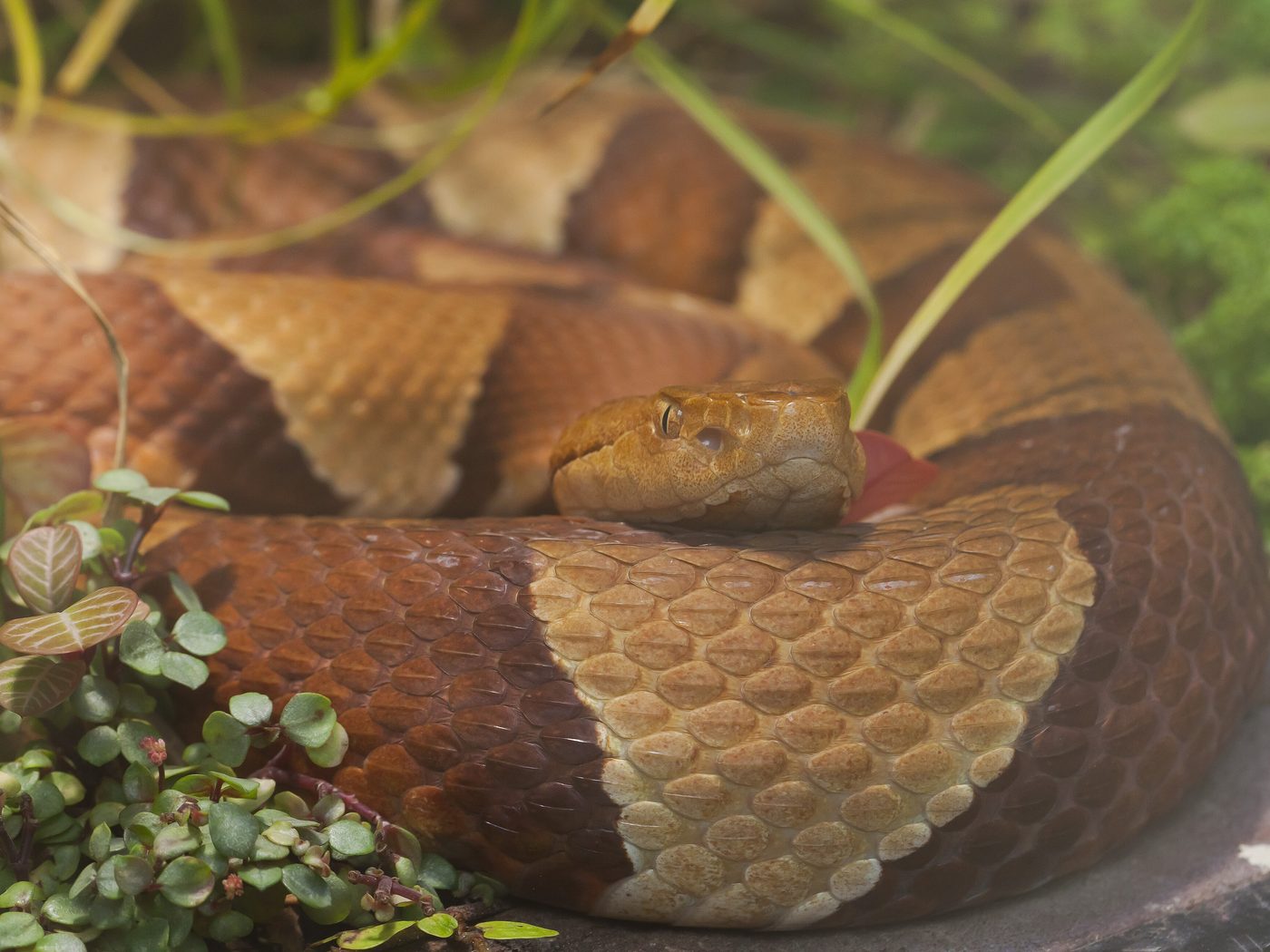
Cicadas matter here. Copperheads gather at the base of trees during heavy emergences and hunt the nymphs coming out of the ground, which puts a normally ridge-dwelling snake into suburban yards, at dusk, at exactly the height of a bare ankle.
Where to expect it.
Wooded and rocky ground county-wide, including the wooded edge of a great many back gardens.
Active Season
Charted from this species’ own research-grade records inside Williamson County.
What it gets mistaken for.
More snakes are killed in this county as copperheads than there are copperheads. Learn one thing and make it the hourglass.
Blotches widest over the spine, a dark line through the eye, and a body already too long and thin for its markings. A copperhead is banded widest at the sides and thick from the start.
Blotches black-edged and widest across the back, a patterned head, and a black-and-white checkered belly.
Bands narrow at the sides and wide over the spine, no facial pit, round pupil, and it is in the water, which a copperhead rarely is.
An upturned snout, a flattened hood and a great deal of hissing. A copperhead does none of that; it goes still.
When you meet one.
It will not move and it will not warn you. The overwhelming majority of copperhead bites happen to a hand or a foot that arrived somewhere before an eye did.
Back away and leave it.
Six feet is enough. It has no interest in following you and every interest in not being found.
Look before the hand goes in.
Mulch, woodpiles, rock walls, leaf-filled window wells, the gap under the deck steps. Eyes first, every time.
Carry a light.
Copperheads hunt at night through the warm months. A headlamp on the way to the bins costs nothing.
Call, do not handle.
Most bites in this country happen to people who were trying to kill or move the snake. TWRA keeps a list of wildlife control operators.
The first two weeks.
Copperhead venom is the least potent of the four in Tennessee and deaths are extremely rare. It is still an emergency department visit, every time, because nobody can tell from the outside how much venom went in.
Get clear, then get moving.
Step away from the snake. Remove rings and watches before swelling starts, keep the limb still and around heart level, and drive to a hospital rather than waiting to see.
Burning pain and swelling.
Copperhead bites hurt out of proportion to their danger. Swelling spreads from the bite and bruising follows. Roughly a quarter of copperhead bites deliver no venom, but that is a determination made in a hospital, not a driveway.
Observation, not automatic antivenom.
The bite is marked and the swelling margin re-measured on a schedule. Most copperhead envenomations are managed without antivenom; it is given for progression, clotting problems or systemic signs.
Swelling, then function.
Expect a limb that stays swollen and sore for days. Return the same day for spreading redness, fever, a wound that worsens, or new bruising and bleeding.
Free, staffed around the clock, and the service your emergency department will consult anyway. Call it on the way to the hospital, not instead of going. The full protocol, including what never to do to a snakebite, is on the Bitten page.
Pack it. Print it. Pass it on.
Most snakes killed in Williamson County are killed by someone who could not name them. Send this to anyone who gardens, hikes, keeps a woodpile, walks a dog off the greenway, or has a teenager who reaches into things. That is most of the county.
Sources
Medical disclaimer. This field guide is general educational information, not medical advice, and is no substitute for professional diagnosis or treatment. Any bite from a copperhead or a timber rattlesnake is a medical emergency: go to an emergency department, and call the Tennessee Poison Center at 1-800-222-1222 on the way. In an emergency, call 911. Identification disclaimer. No photograph identifies a snake with certainty, and this guide will not make anyone a herpetologist. When the answer matters, keep your distance and send a photograph to someone who does this for a living.