Eastern Black Kingsnake
Identification
A shiny black constrictor speckled with white, and the strongest single argument in this guide for leaving a snake where it is. Kingsnakes eat other snakes, venomous ones included.
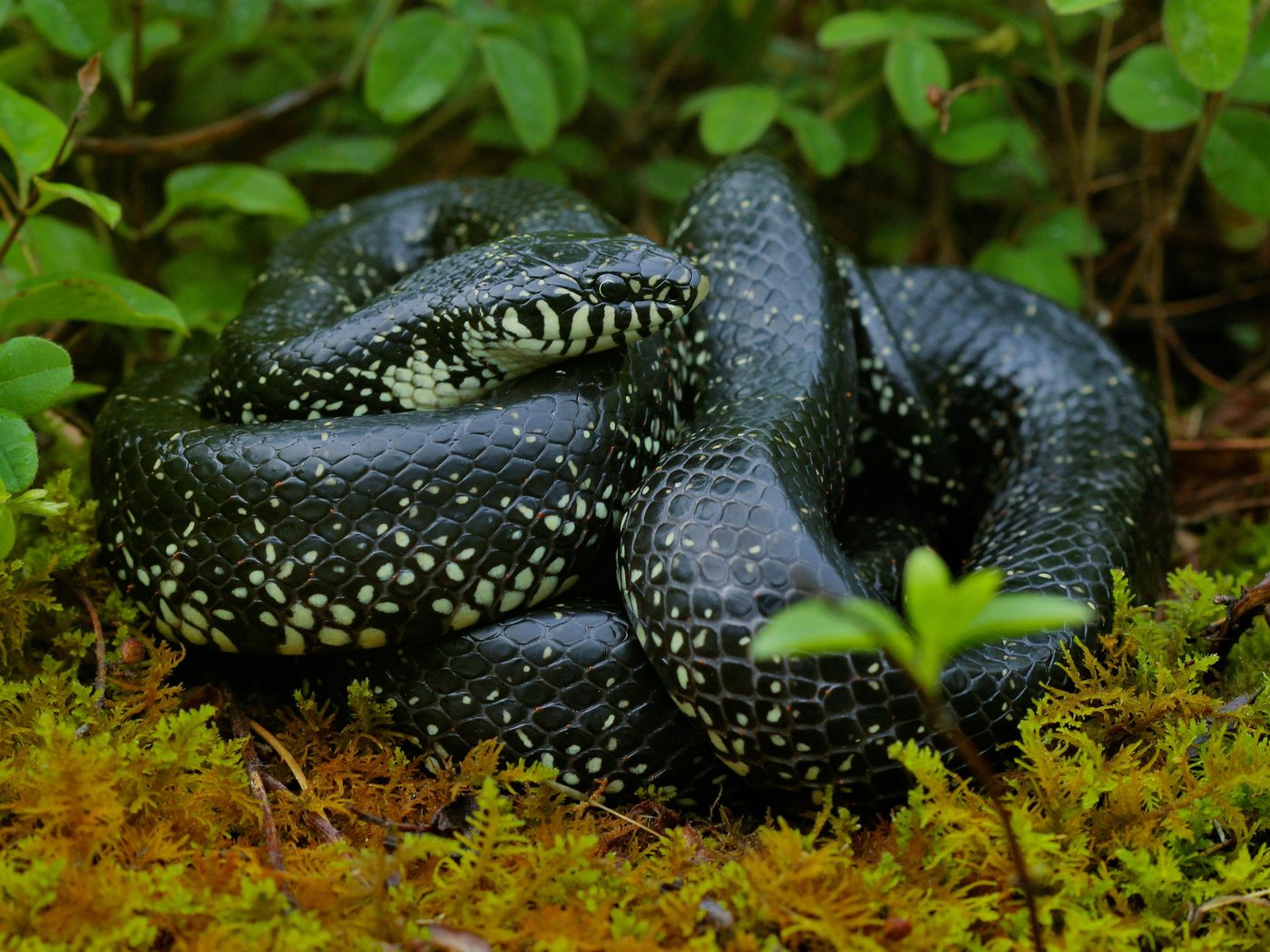
Kingsnakes are largely immune to pit viper venom, which is why a copperhead is prey rather than a fight. A yard that holds a kingsnake is a yard that is already managing its own copperhead problem, for free, without a call-out fee.
Where to expect it.
Present across the county but rarely out in the open, which is why 45 records understate it.
Active Season
Charted from this species’ own research-grade records inside Williamson County.
What it gets mistaken for.
Two other black snakes live here, and telling them apart is a matter of what the white is doing.
The kingsnake's white sits on the scales, as speckles. The ratsnake's white is skin between scales, visible only when it stretches. The kingsnake is also smooth and round; the ratsnake is keeled and loaf-shaped.
A racer is plain black with no speckling, a white chin and a brown or amber eye. It is also faster than you.
A pinesnake has dark blotches on a whitish ground and strongly keeled scales. It is a sand and pine species and does not belong to this list.
When you meet one.
It vibrates its tail, may musk, and will bite if handled. It is also the snake you most want on your property.
Leave it, deliberately.
You are looking at free copperhead control. Nothing else on this list does that job.
Put the board back.
Cover objects are how a kingsnake hunts. Replacing the board costs you nothing and keeps the snake resident.
Fix the hardware cloth.
It came for eggs and rodents. Half-inch hardware cloth on the run and a closed nest box at night solve it permanently.
Do not interrupt.
This is the behavior that makes the species worth protecting. Photograph it, keep your distance, and let it finish.
Pack it. Print it. Pass it on.
Most snakes killed in Williamson County are killed by someone who could not name them. Send this to anyone who gardens, hikes, keeps a woodpile, walks a dog off the greenway, or has a teenager who reaches into things. That is most of the county.
Sources
Medical disclaimer. This field guide is general educational information, not medical advice, and is no substitute for professional diagnosis or treatment. Any bite from a copperhead or a timber rattlesnake is a medical emergency: go to an emergency department, and call the Tennessee Poison Center at 1-800-222-1222 on the way. In an emergency, call 911. Identification disclaimer. No photograph identifies a snake with certainty, and this guide will not make anyone a herpetologist. When the answer matters, keep your distance and send a photograph to someone who does this for a living.