Milksnake
Identification
Middle Tennessee sits where three subspecies overlap, so a local milksnake can come out gray and red-blotched or banded in red, black and white. Whatever it looks like, it is a constrictor with no venom, and it is killed for a copperhead more often than anything except the watersnake.
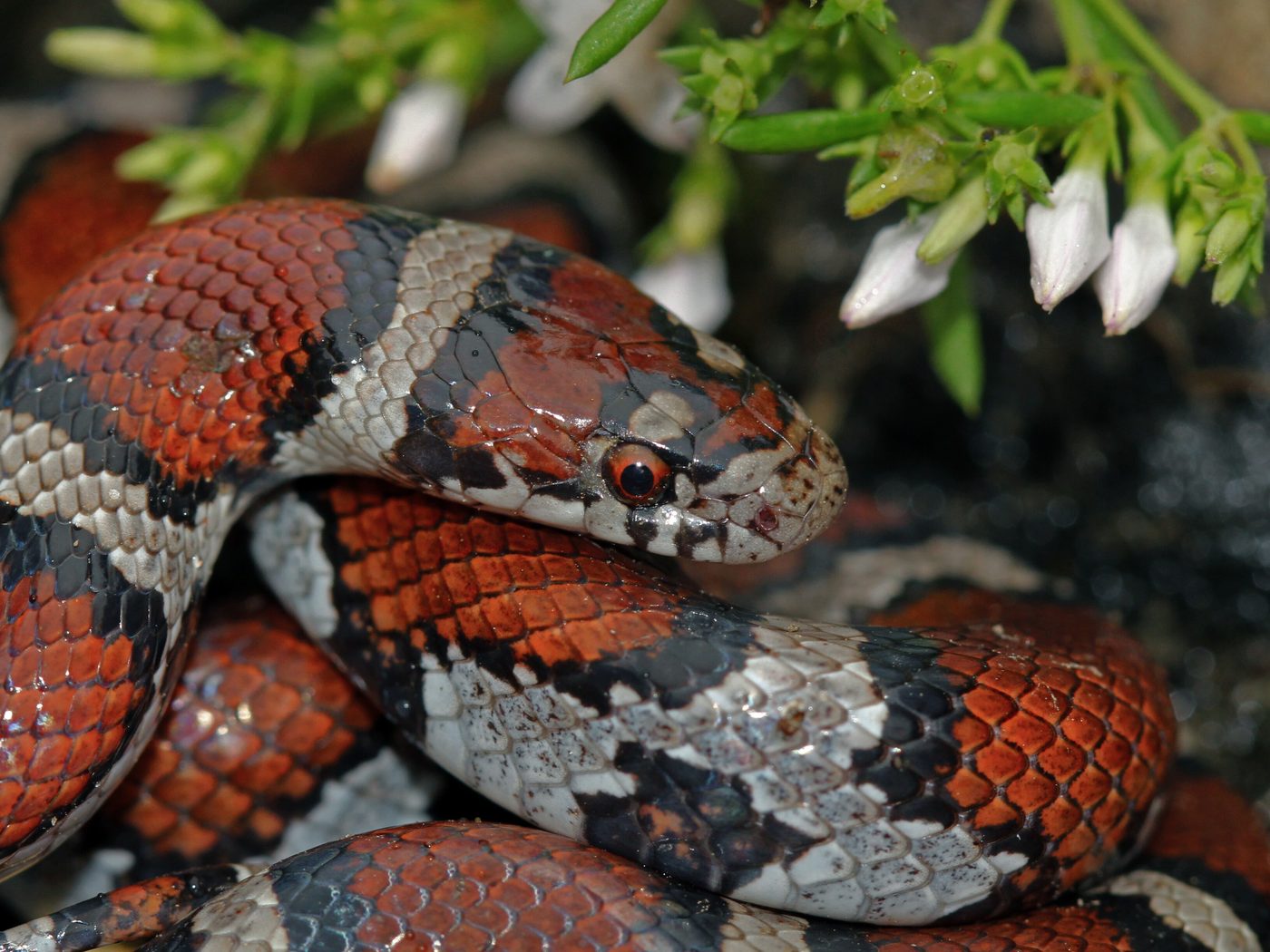
The name comes from a barn myth, that the snake milks cows in the night. It does not, and cannot. It is in the barn for the same reason everything else is: mice.
Where to expect it.
Across the county wherever there is rock and hardwood, but out mostly after dark.
Active Season
Charted from this species’ own research-grade records inside Williamson County.
What it gets mistaken for.
This is the second half of the copperhead problem. Read the blotch geometry and the head color and it resolves in about two seconds.
A milksnake's dark markings are widest across the spine and edged in black. A copperhead's crossbands are widest at the sides and pinch to a waist over the spine. The copperhead's head is plain coppery red; the milksnake's is patterned.
A scarletsnake has a plain white belly. The milksnake's belly is checkered black and white.
A prairie kingsnake's blotches are brown, rounder, and further apart, with an arrowhead mark on the crown and a belly of brown rectangles rather than black checks.
When you meet one.
Cornered, it rears the front third, vibrates its tail against leaf litter, and strikes. All three behaviors are borrowed from the animal it is imitating.
Leave it.
A milksnake in a feed room is a rodent problem being solved without bait or traps.
It is a bluff.
The raised neck and the buzzing tail are copperhead theatre performed by a snake that cannot back it up.
Photograph the head.
Plain copper crown means copperhead and means leave. Patterned crown with a pale V means milksnake.
Bucket and board.
Same method as a gartersnake. It came in after a mouse, so check for the mouse afterwards.
Pack it. Print it. Pass it on.
Most snakes killed in Williamson County are killed by someone who could not name them. Send this to anyone who gardens, hikes, keeps a woodpile, walks a dog off the greenway, or has a teenager who reaches into things. That is most of the county.
Sources
Medical disclaimer. This field guide is general educational information, not medical advice, and is no substitute for professional diagnosis or treatment. Any bite from a copperhead or a timber rattlesnake is a medical emergency: go to an emergency department, and call the Tennessee Poison Center at 1-800-222-1222 on the way. In an emergency, call 911. Identification disclaimer. No photograph identifies a snake with certainty, and this guide will not make anyone a herpetologist. When the answer matters, keep your distance and send a photograph to someone who does this for a living.