Featured · Explainer · October 20, 2026
A checklist for moving to Franklin
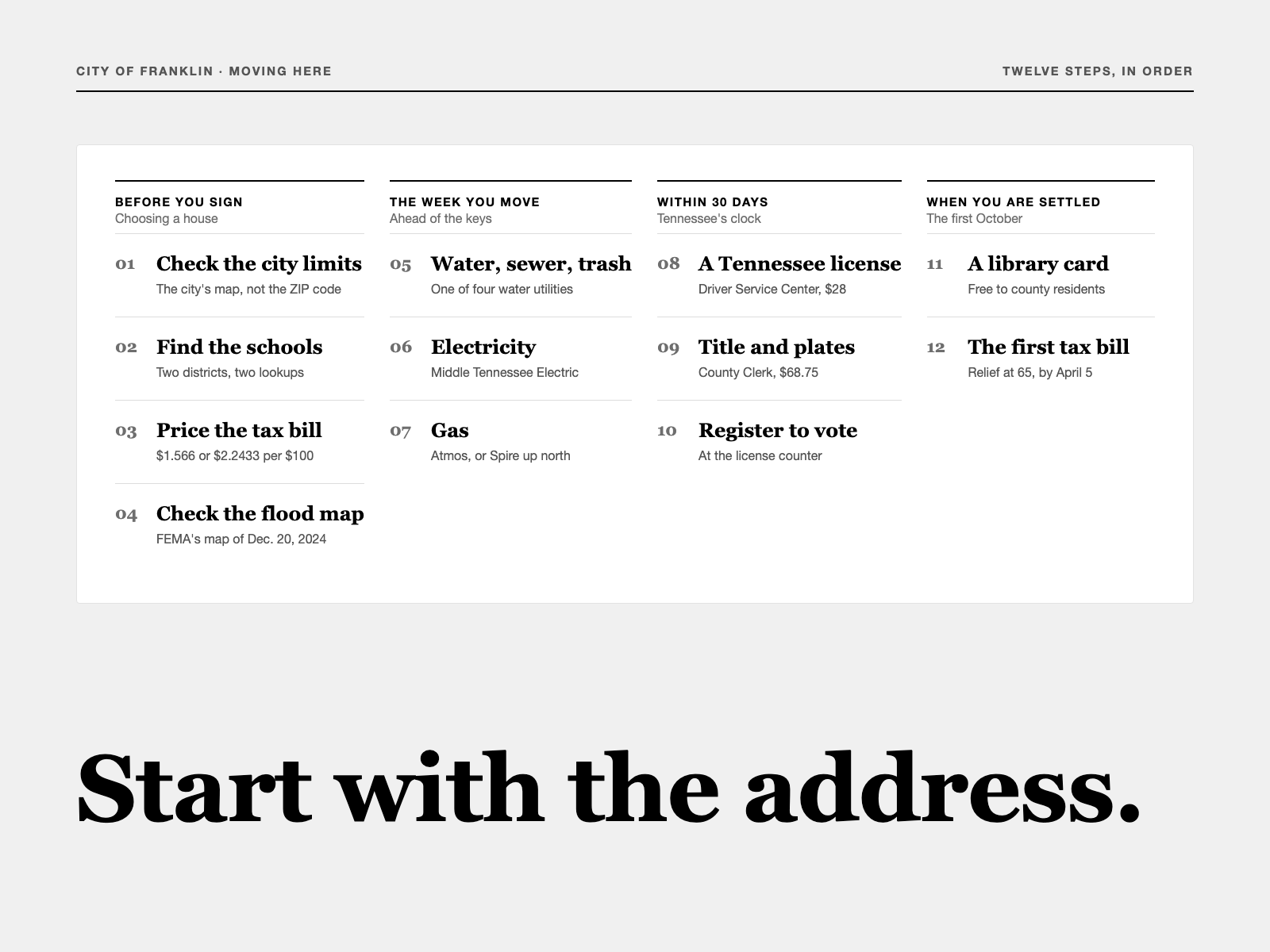
Twelve steps in the order they fall due: what to check before signing, what to start the week you move, and the 30-day clock on a license, plates and a voter registration.
Living Here
Where to live, what it costs, and how the city's services work. The neighborhood guides, the explainers, and the lookups that answer a question from an address.
Featured · Explainer · October 20, 2026
Twelve steps in the order they fall due: what to check before signing, what to start the week you move, and the 30-day clock on a license, plates and a voter registration.
How Franklin works
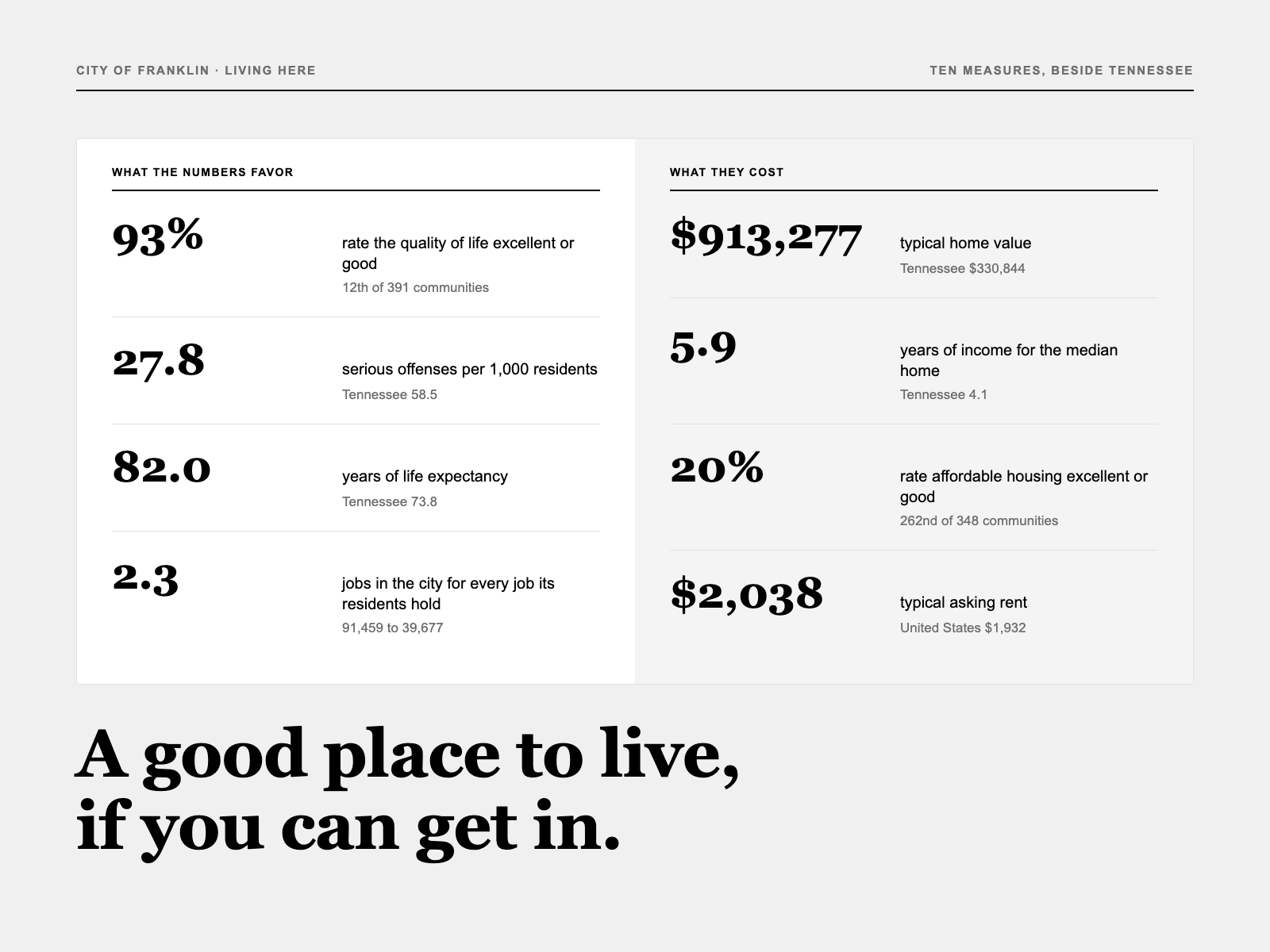
What residents say in the city's own survey, then the figures for cost, schools, crime, health, jobs, commuting, weather and the river, each beside the state's, and which households carry the costs.
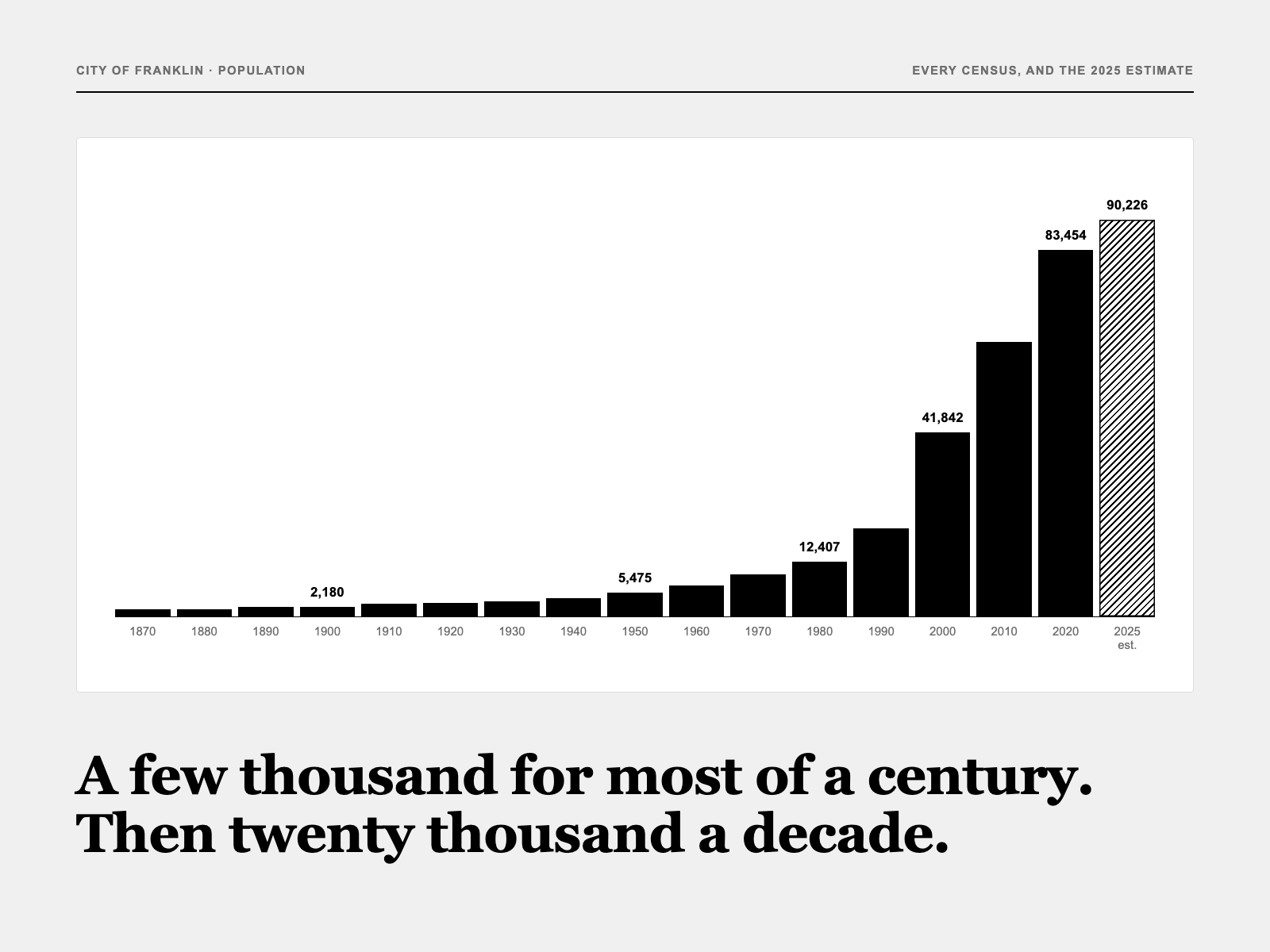
The count at every census since 1870, the Census Bureau's 2025 estimate, why the state, the city and the ZIP codes give different numbers, and where the 2010s' 21,000 newcomers went.
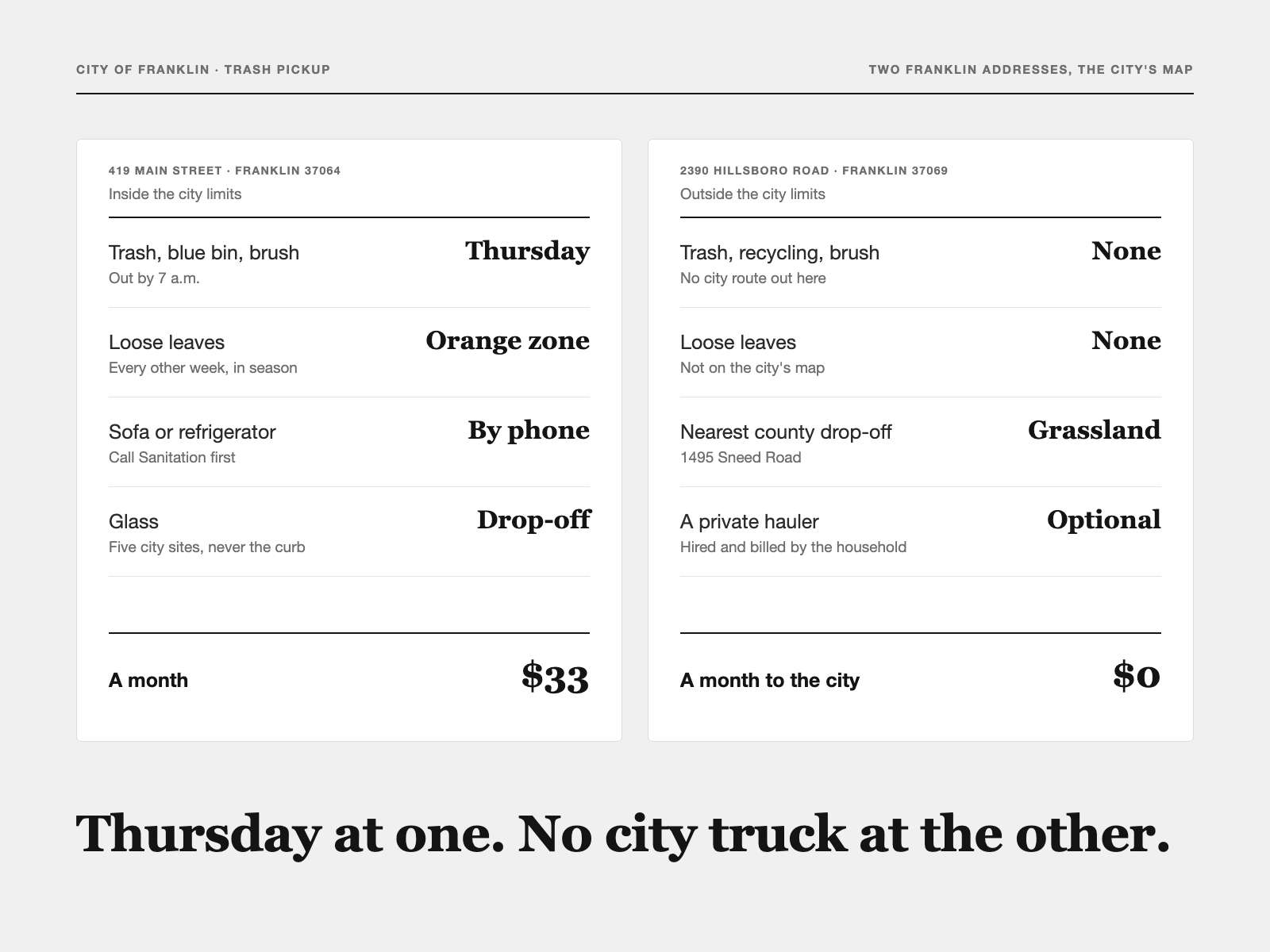
Which day the city picks up at your address, what goes in the cart and the blue bin, how brush, leaves and a sofa get hauled away, and what changes on a holiday week.
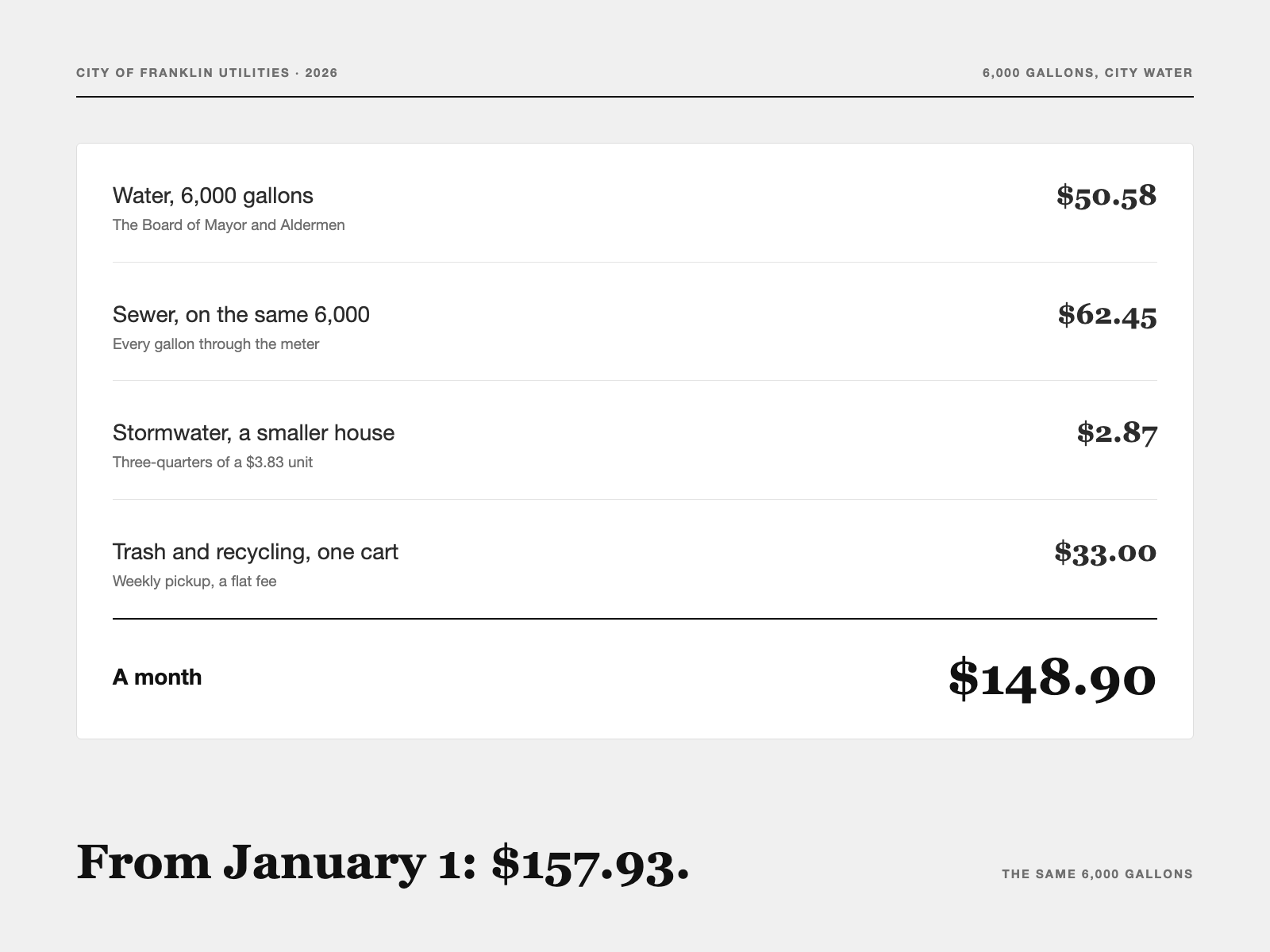
The four lines on a City of Franklin utility bill, who sets each one, what January's increases add, and what the city will and will not adjust when a bill comes in high.
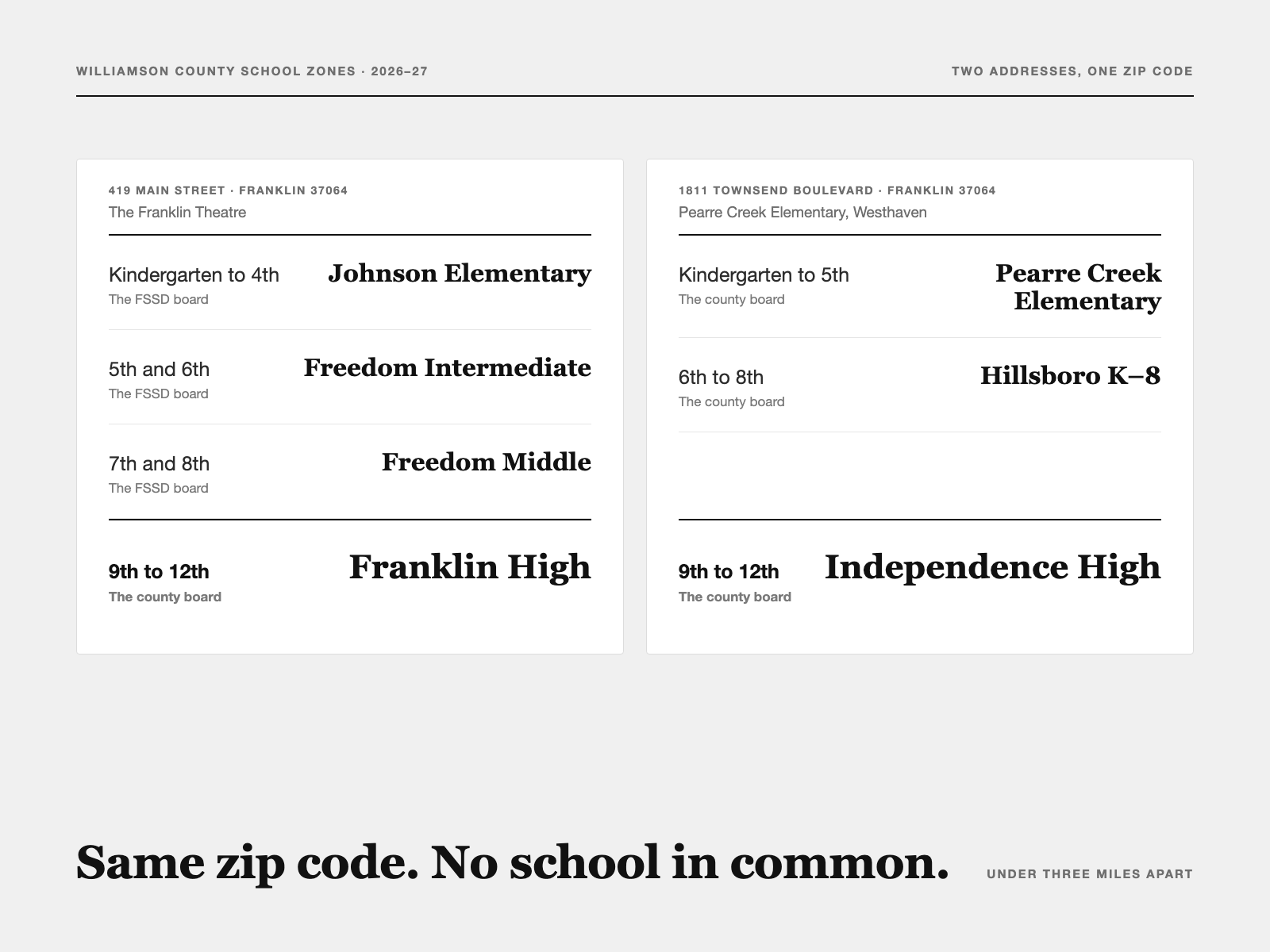
Two districts, the lines between their schools, who moves those lines, and why the zip code on a listing does not settle which school a house is zoned for. With every zoned high school's enrollment and open seats.
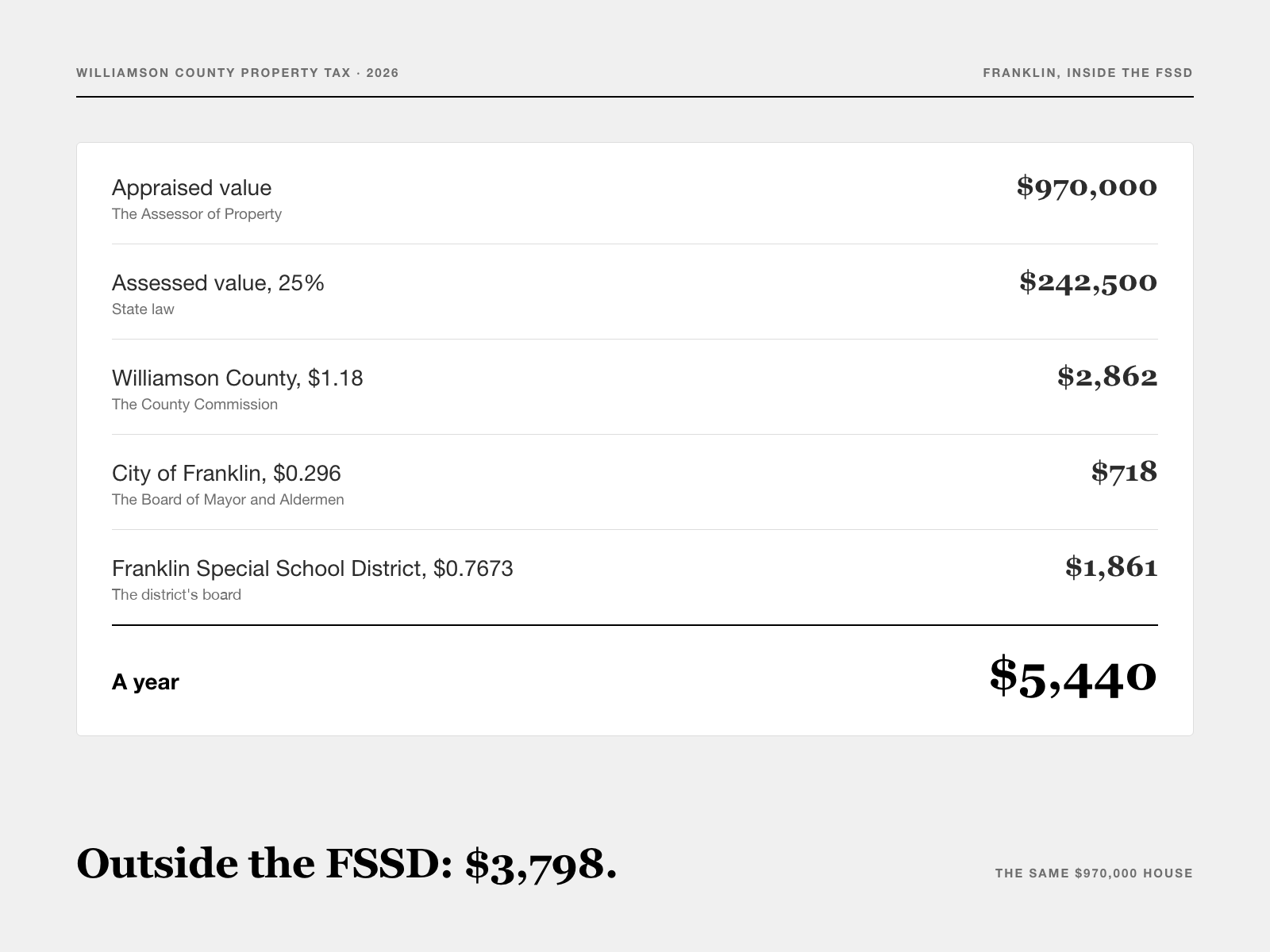
How the Assessor's value becomes a bill, the 2026 rate in every town in the county, an estimator, the calendar from appraisal to due date, and what to do if the value looks wrong.
Neighborhood guides

The town the rest of the county is measured against. What a house costs by tier, the county-city-FSSD tax stack with a worked example, two school districts and four high schools, the honestly timed I-65 commute, the six character areas, the 2026 festival calendar, and the trade-offs nobody selling a house will mention.
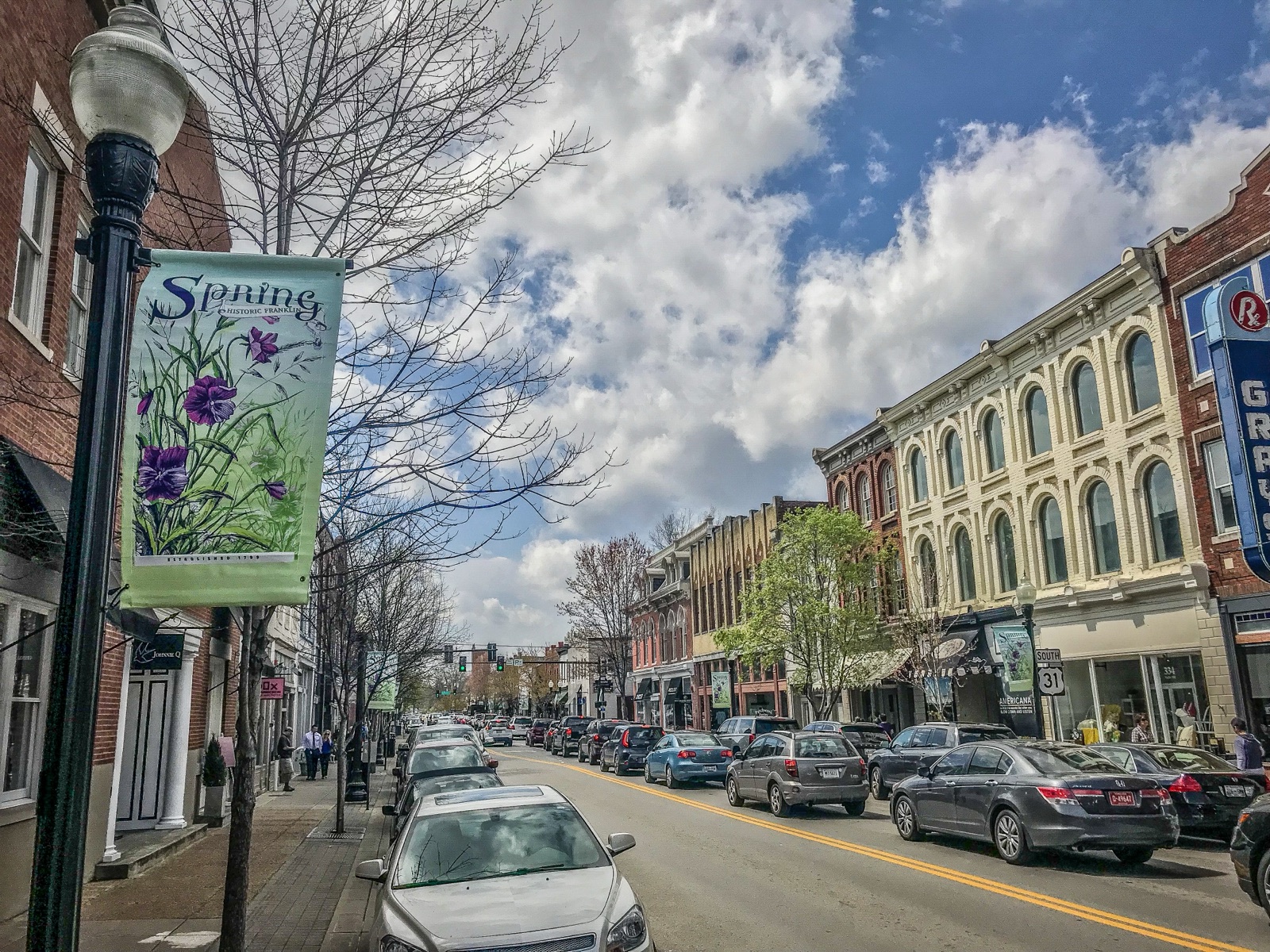
The 1799 grid and five National Register districts: Hincheyville, Lewisburg Avenue, Adams Street, Natchez Street. What 1828-to-2026 homes cost, the overlay rules, FSSD schools, floods, festivals, parking.
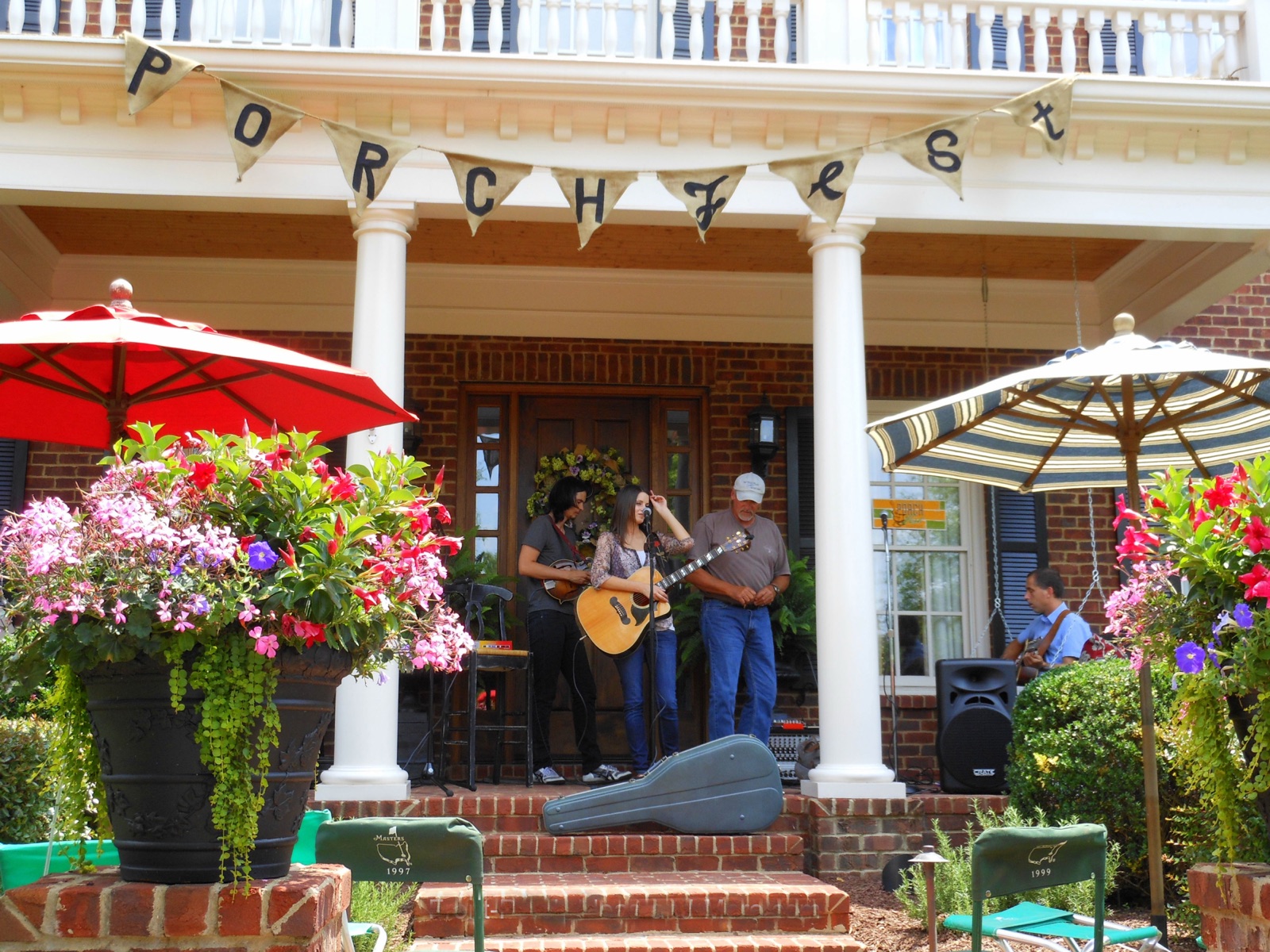
The master-planned town-within-a-town: alleys, porches, a Kroger and a stage in the town center, five pools, a golf course, and an association that runs it like a municipality. The 2026 market, the real HOA math, the surprising school zones.
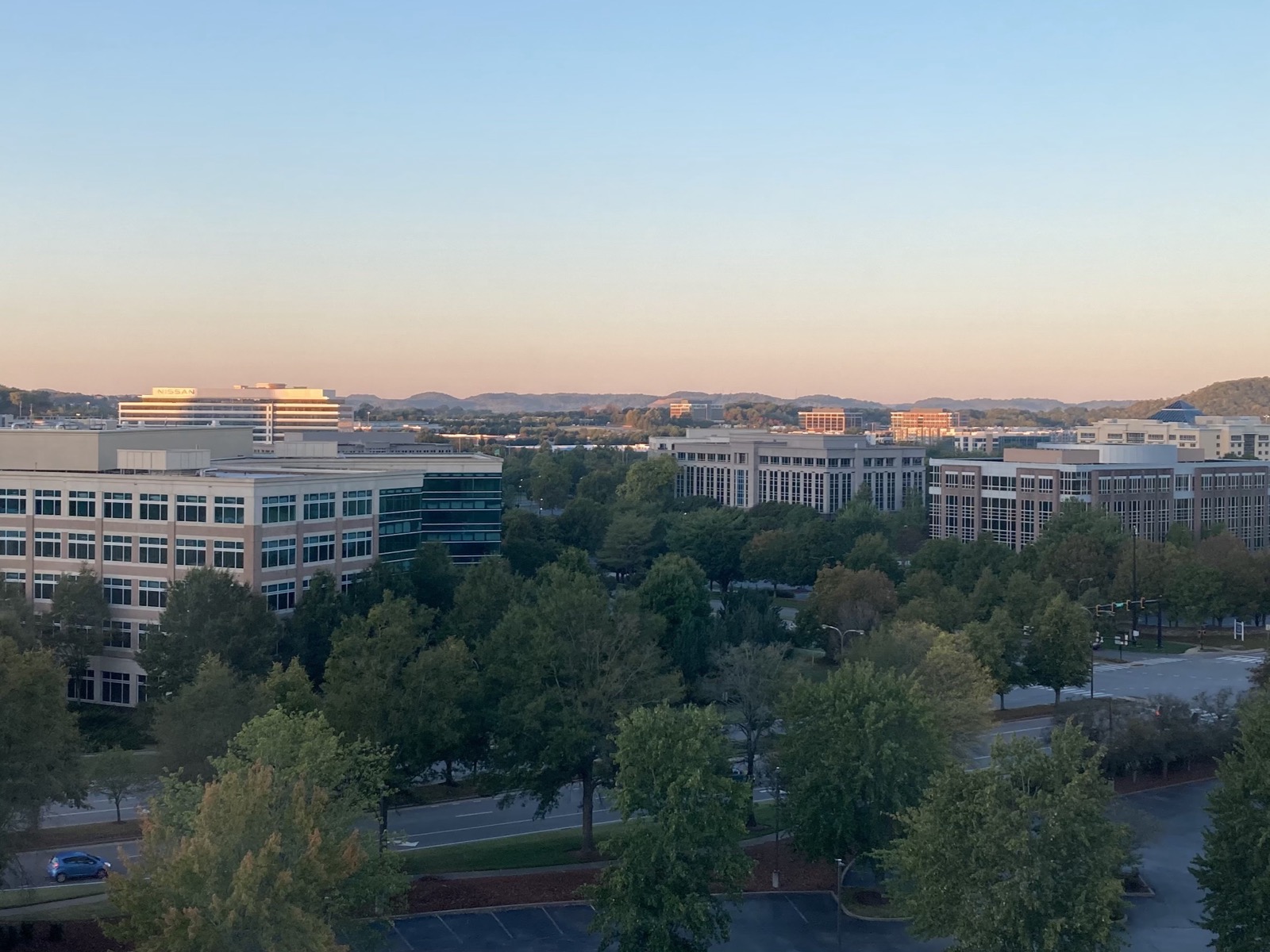
The employment and retail corridor and the housing hung off it on both sides of I-65: Cool Springs East, Forrest Crossing, the Mallory Lane condos, and Cottonwood. The 2026 market, the FSSD tax line, Centennial versus Ravenwood, and what the Galleria rebuild means.
Boyle's town center at exit 61 and the subdivisions that grew up around it since 2012: Lockwood Glen, Stream Valley, Waters Edge, Simmons Ridge, and the Goose Creek side. The 2026 market, the Independence-or-Page split, the I-840 ramp, and what is still being built.
Franklin's largest finished subdivision: 2,137 houses from 1989 to 2001 on a lawyer's old summer farm, two pools, a swim team, a Publix and an elementary inside the fence, and the best price per square foot in the city. The 2026 market, the $60 HOA, and the 30-year-house budget.
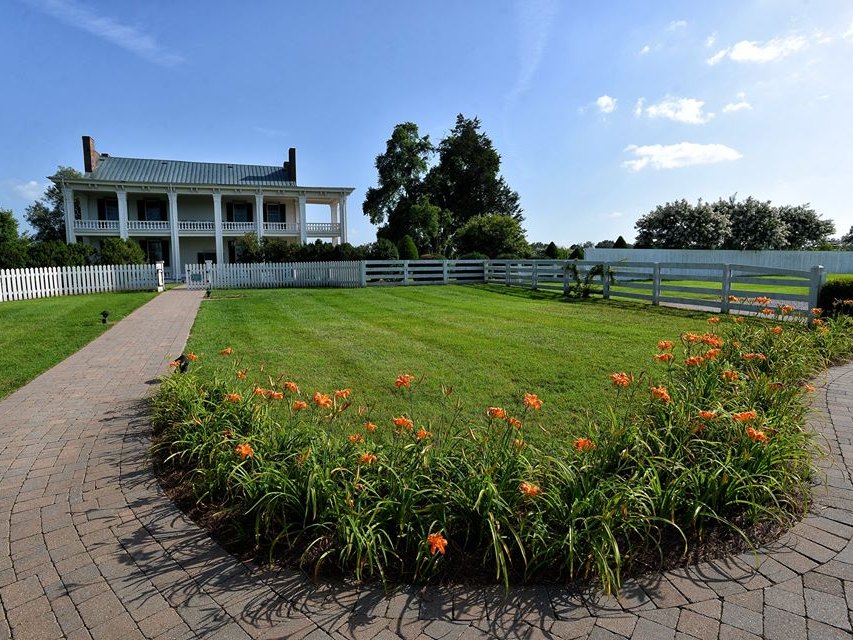
Two big family subdivisions ten years apart: McKay's Mill around its village center and Publix, finished in 2014, and Ladd Park along two miles of the Harpeth, still building. The 2026 market, the Clovercroft-or-Creekside school paths, ten miles of greenway, and the Liberty Pike rebuild.
The established ring inside the loop road: Founders Pointe, Chestnut Bend, Carlisle, and the 1970s ranches on Hillsboro Road and 96 West; Willowsprings and Boyd Mill on Downs; Sullivan Farms south of the square. Five minutes to Main Street, four high schools, and the FSSD line street by street.
Laurelbrooke, Legends Ridge, Temple Hills and its Reserve, Avalon, and the acreage off Old Hillsboro Road. The 2026 market from $690K townhomes to an $11.8 million hilltop, the only staffed gate in Franklin, what the club costs, why most of it pays no city tax, and why half the listings never sell.
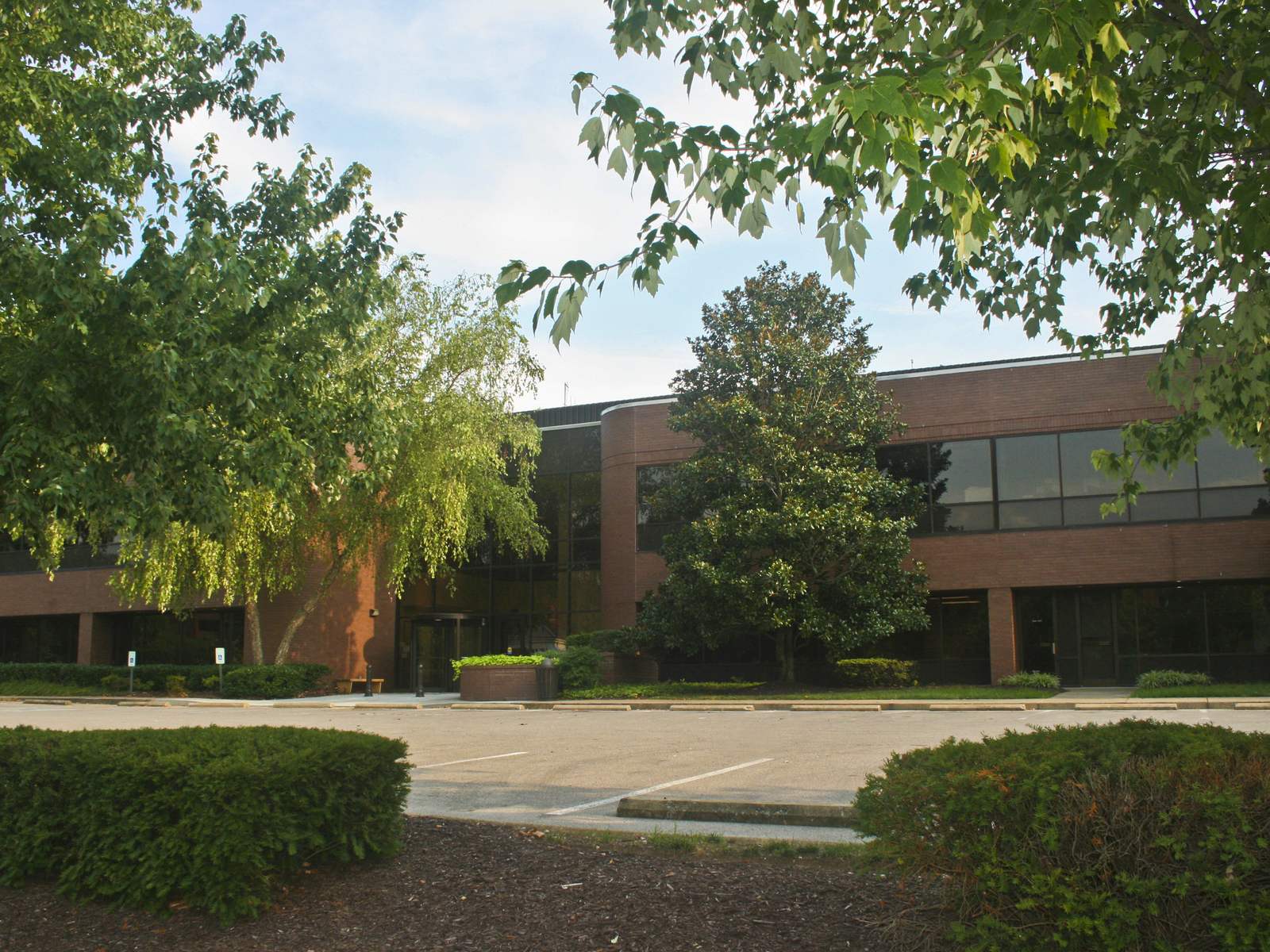
One-acre minimum lots, its own school cluster, and the shortest Nashville commute in the county. The Concord Road and Franklin Road sides, compared.
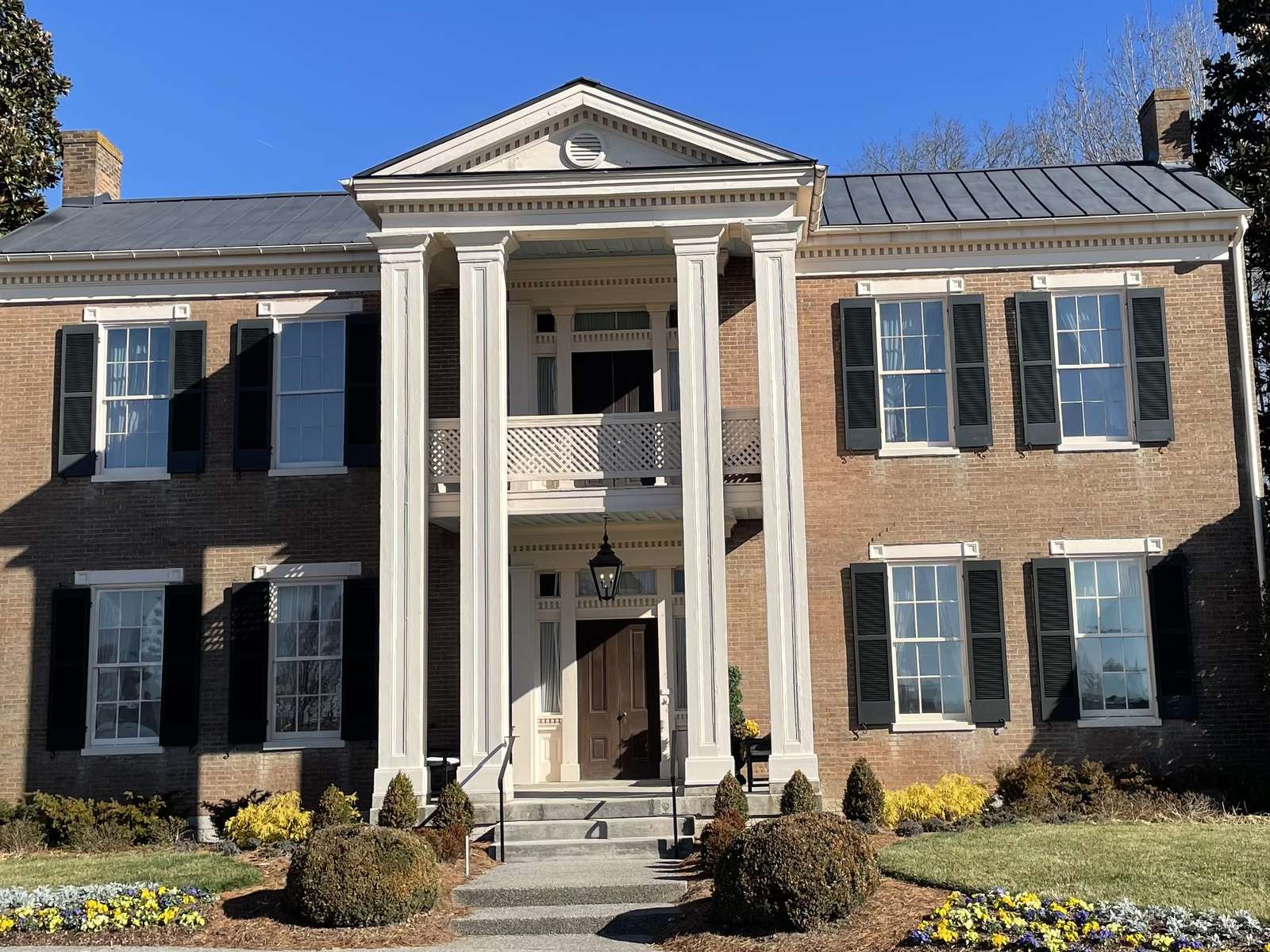
Governors Club, Annandale, Witherspoon, and the golf-course neighborhoods. Membership structures, gate logistics, and the resale picture.
The fastest-growing town in the state. A 1797 crossroads, a wave of 2010s subdivisions, one road under construction until 2036, and a $700,000 discount to Brentwood that no longer includes the tax bill.
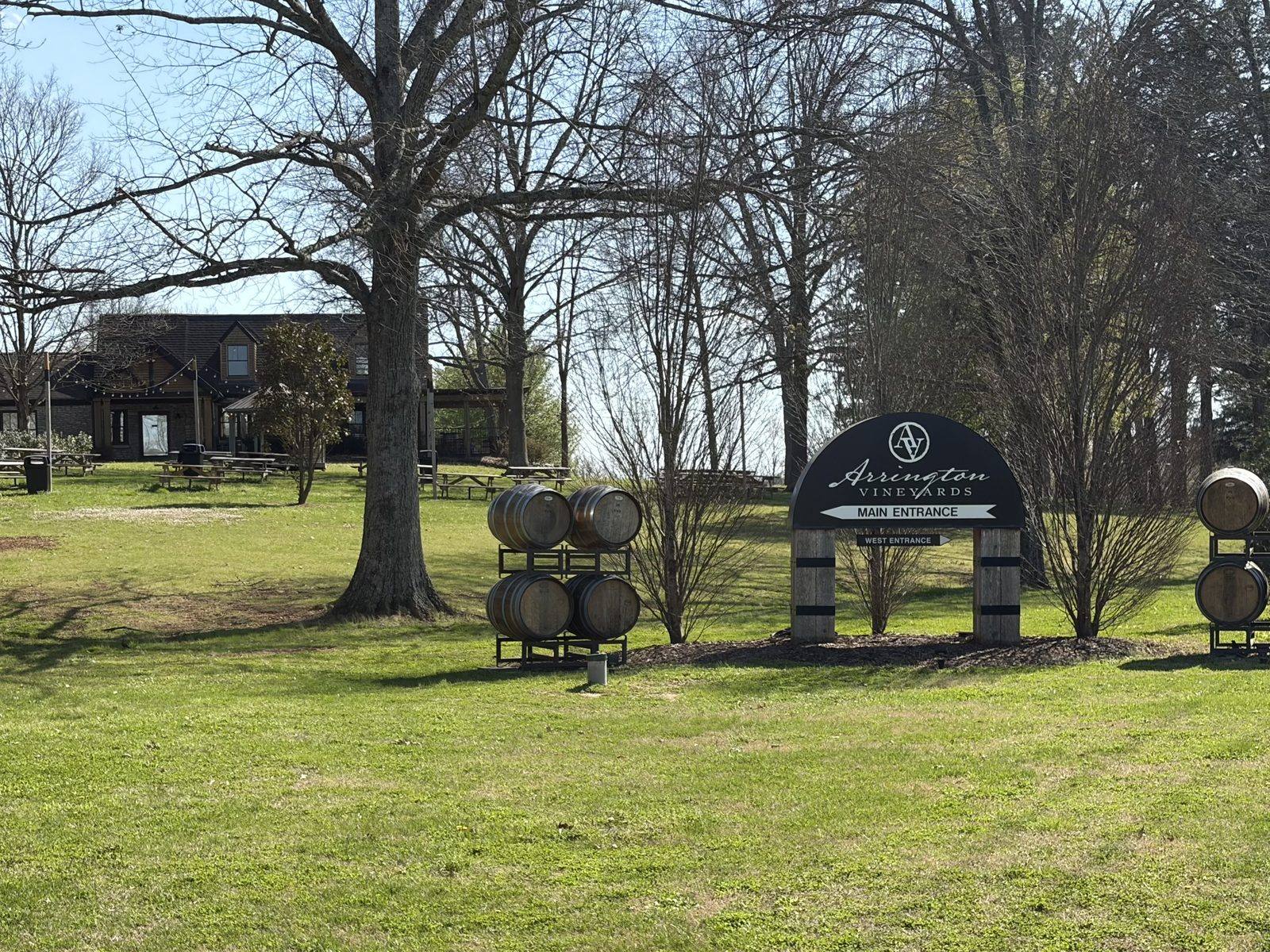
Kings' Chapel, the Grove, Troubadour, Hardeman Springs, and the five-acre farms between them. No town, no city tax, three club gates, and I-840 instead of a main road.
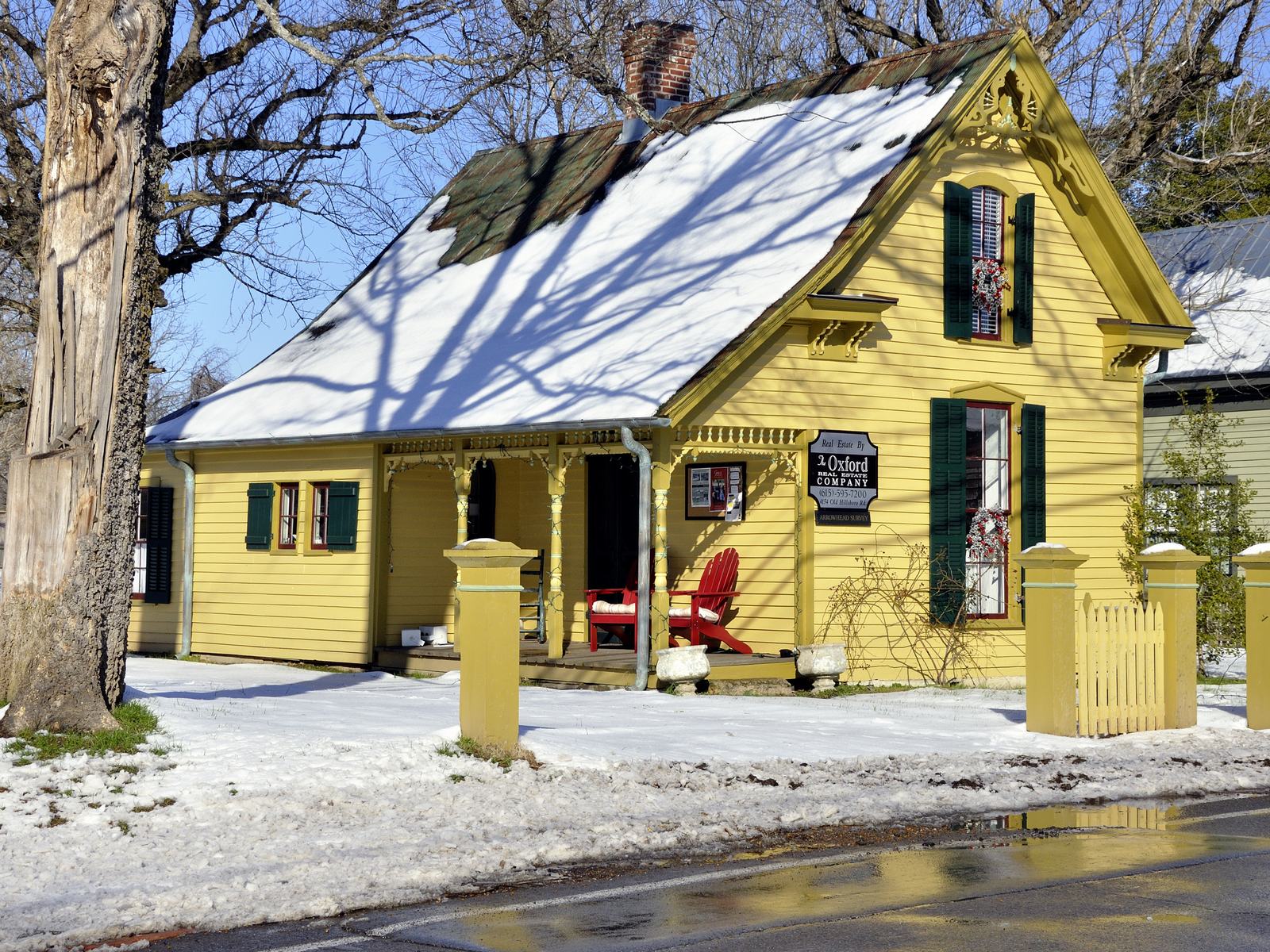
The village, the Natchez Trace, and the farms along Southall, Pinewood, and Bear Creek. A six-acre median lot, easements that run forever, soil that decides whether a lot is a lot, and a market that sells by phone.
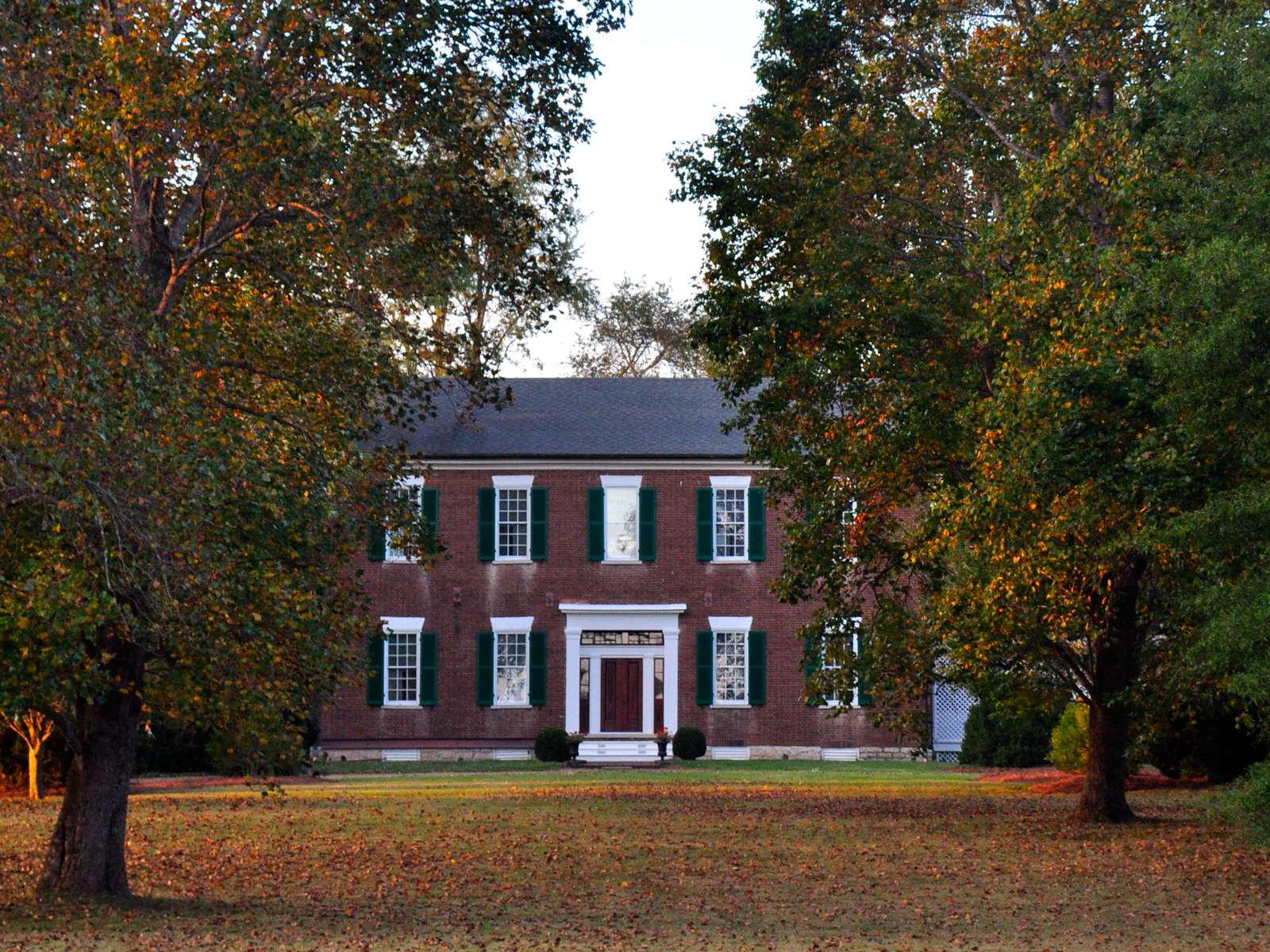
The unincorporated village on Hillsboro Road with its own K-8 cluster, a 76-acre ball park, acre lots under 1960s houses, a Franklin address without Franklin tax, and three kinds of sewer to ask about.
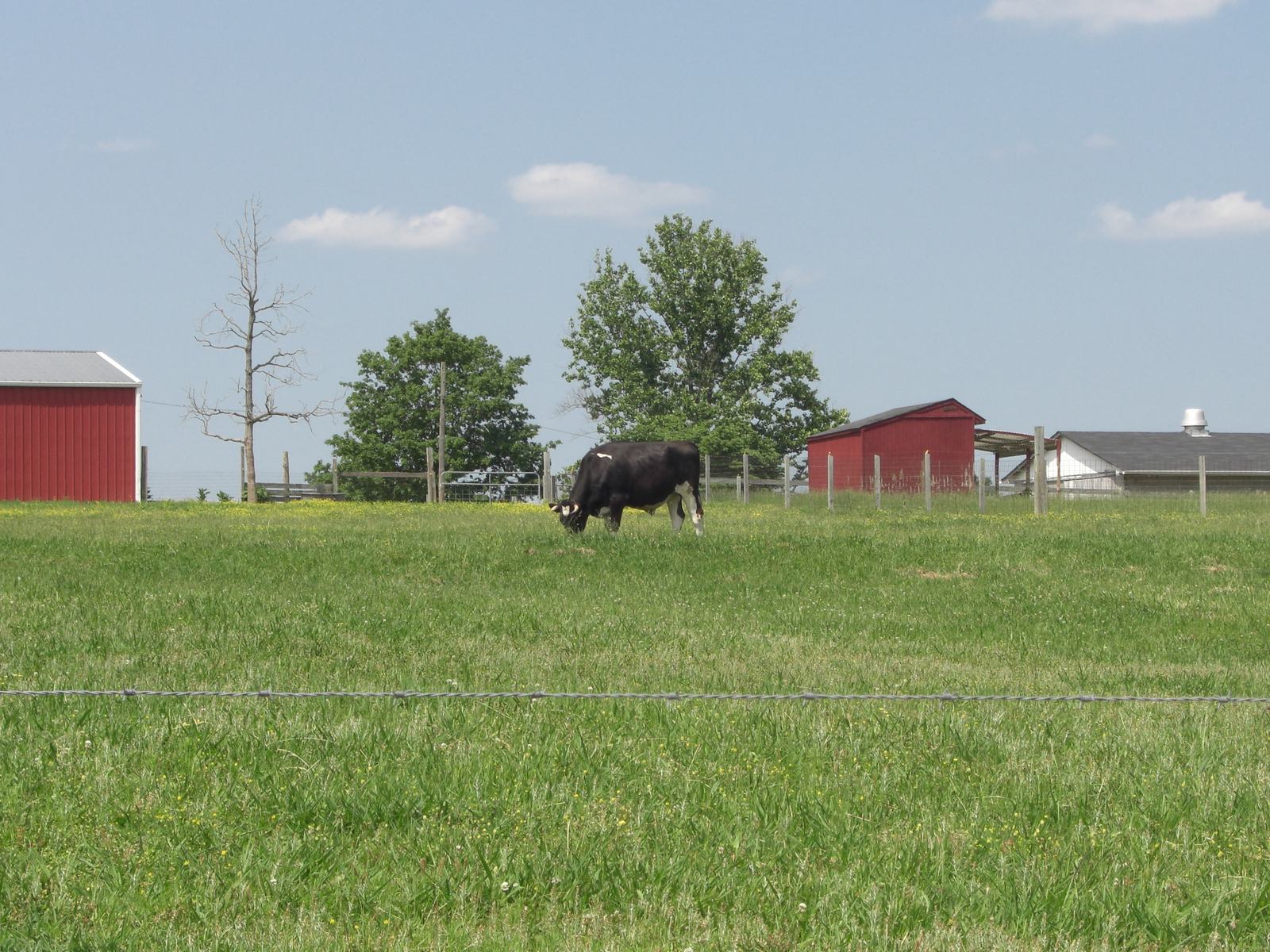
The county's affordable west edge: a $583K median with half the sales built since 2023, a 722-acre park, its own school cluster and city hall, the county's highest city rate, and 40 minutes to Nashville on I-40.
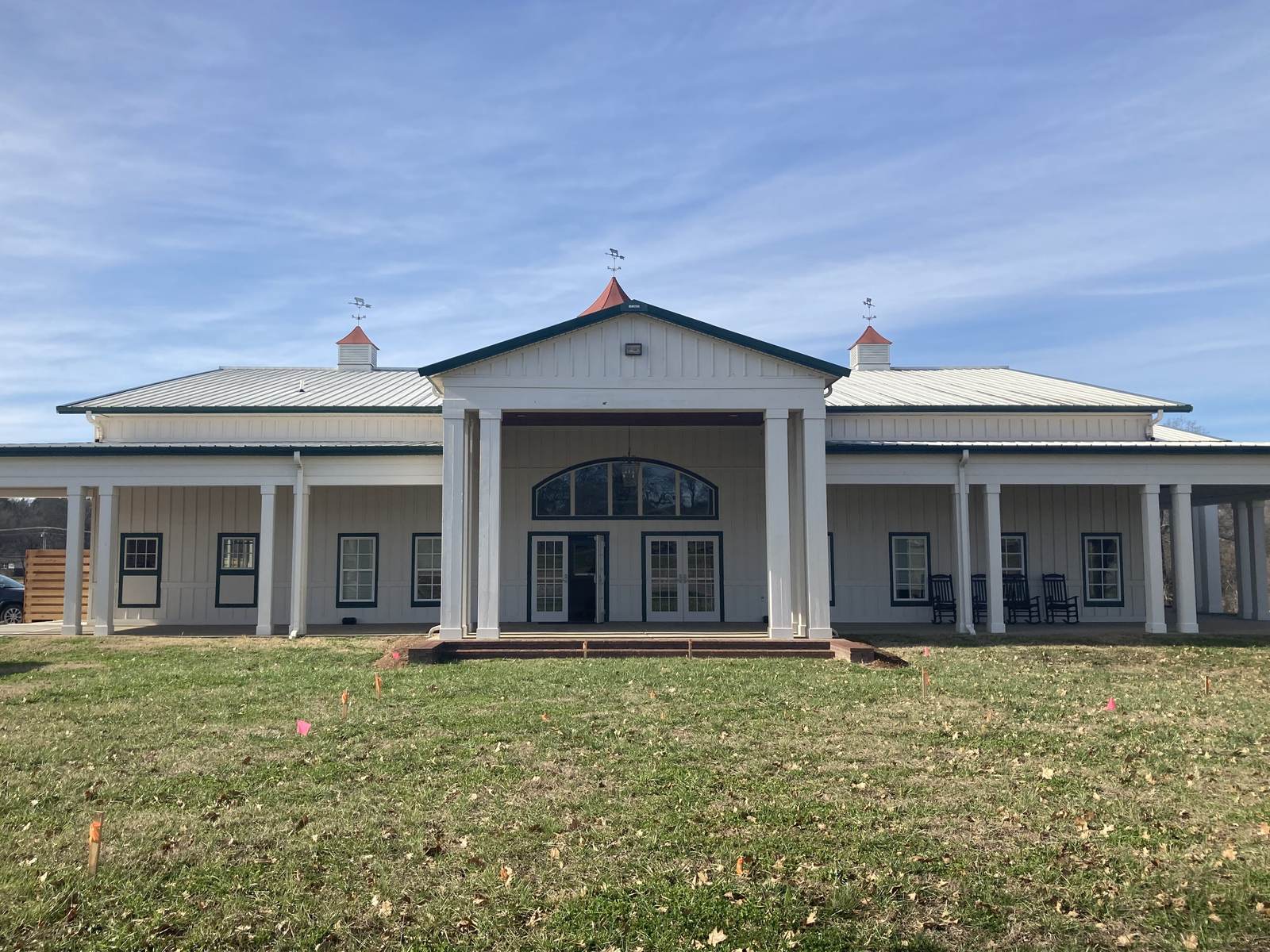
The county's other growth town: a $690K median with 43% of sales new, Williamson schools at the lowest town rate in the county ($1.403), a sewer plant that decides who builds, and 16 minutes to Franklin's square on a two-lane road.
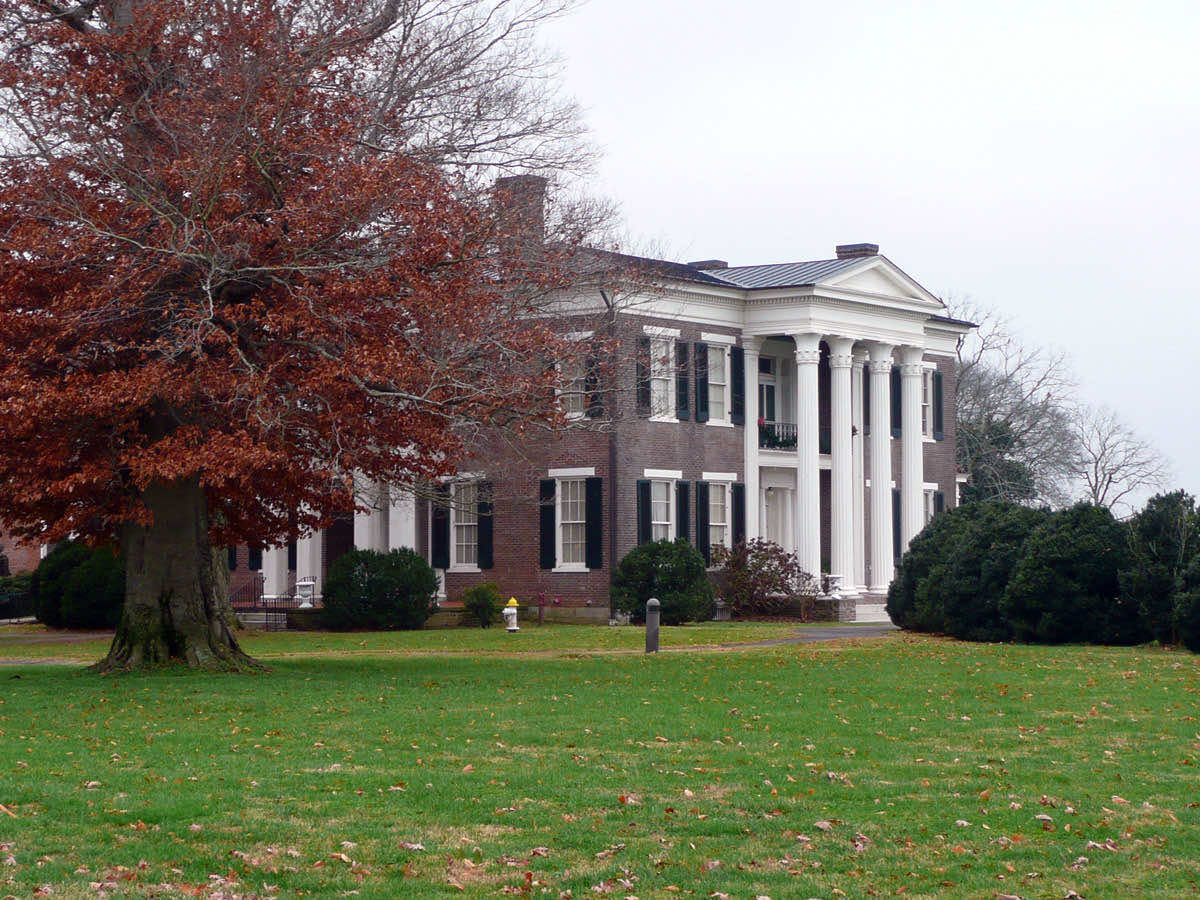
One city on two counties: a $550K median that is $715K on the Williamson side and $490K on the Maury side, two school districts, two tax rates, the GM plant and its 5,000 jobs, and a state consent order deciding who gets a sewer tap.
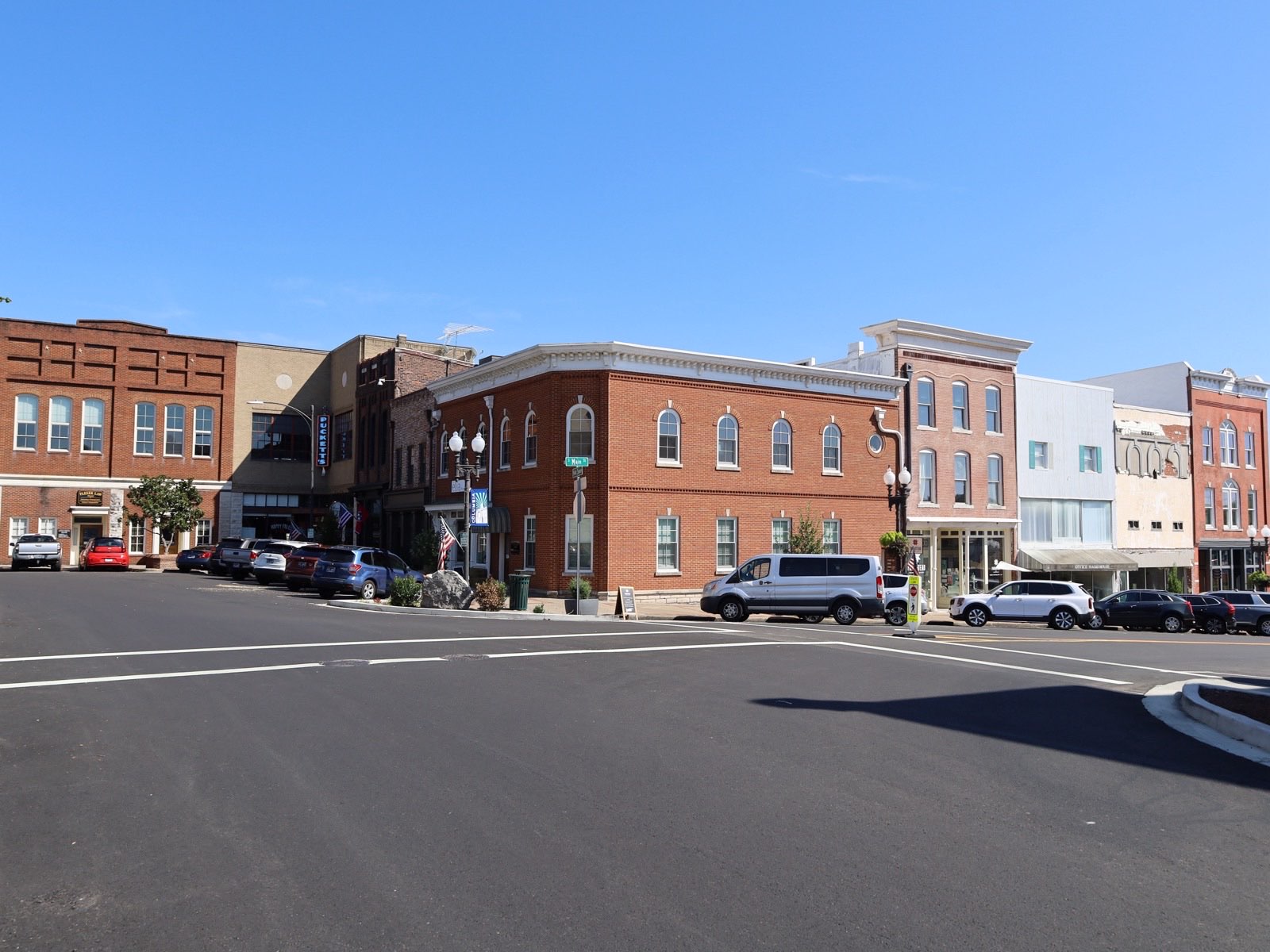
The county seat, and the cheapest median in the series: $385K, a rate that just reset to $1.9758, a courthouse square that came back, school zones that ignore the mailing address, and a $520M bet on the Duck River paid for out of the water bill.
Type in your address
One address, every answer below at once, plus the water utility, the tax rate and your state and federal districts.
Type a street address for its pickup day and leaf zone, from the city's own address map.
Every address inside the city limits is in one of four wards; the lookup names its alderman.
Twelve districts, two commissioners each; the lookup finds an address's district on the county's map.
Every parcel's zoning district from the city's zoning map, and the ordinance that rezoned it where there is one.
Each school district runs its own lookup; how to use them, and why an address in the FSSD needs both.
The city's live count for the 2nd Avenue and 4th Avenue garages, level by level.
Ask Frontline
A line on a bill, a sign on a lot, a rule nobody could explain at the counter. Send the question. The best ones become the next explainer, and we will credit you by first name and neighborhood unless you would rather we did not.
