Northern Cottonmouth
Identification
Seven research-grade cottonmouth records sit inside this county, from the Harpeth, from Brentwood, from a Franklin back garden. TWRA maps the species to West Tennessee and the counties of the northern Highland Rim, and Williamson County is in neither. Both of those statements are true, and the entry exists to hold them next to each other.
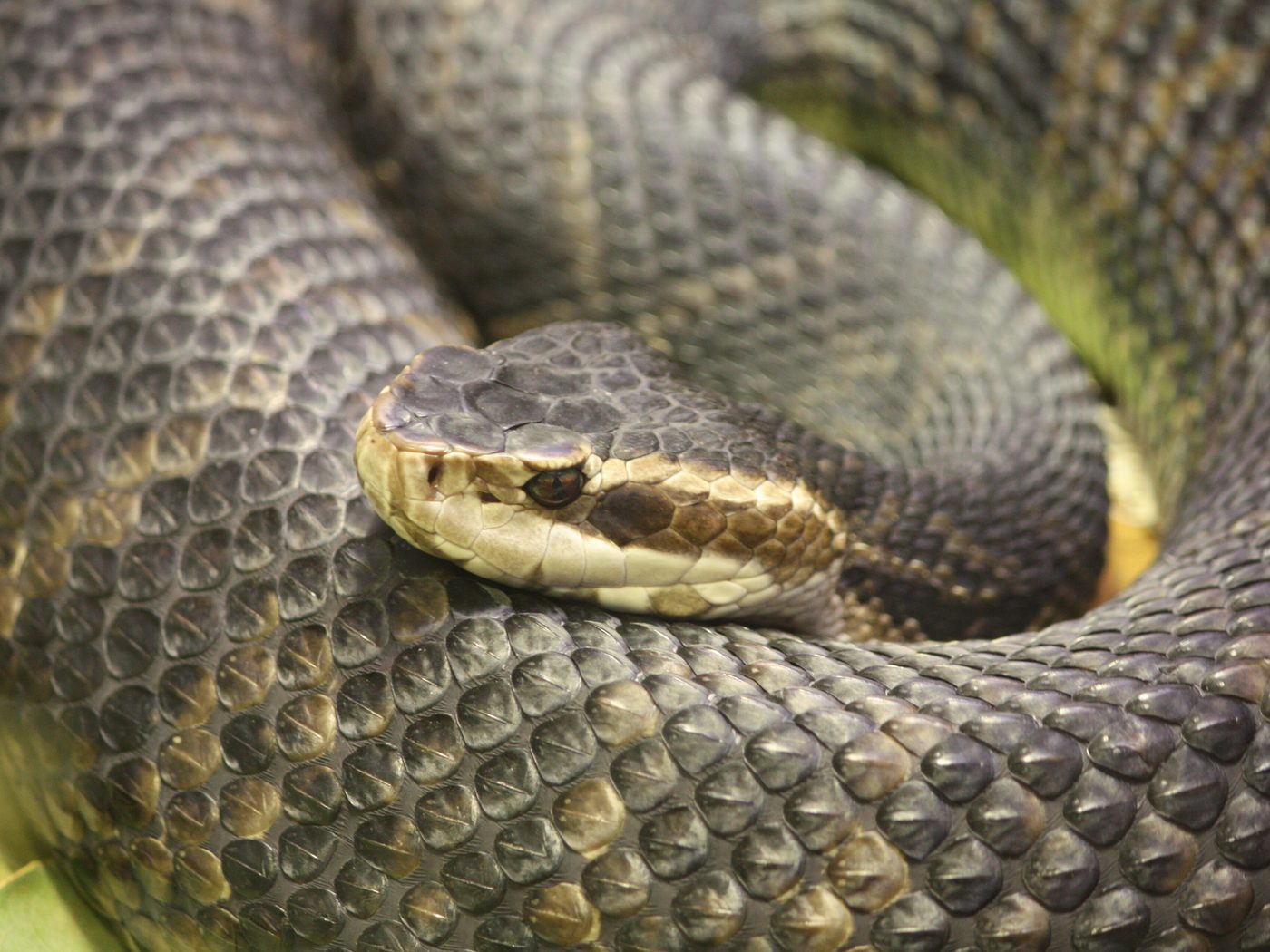
Research grade on iNaturalist means two or more people agreed on an identification, not that a herpetologist confirmed it. Cottonmouth-for-watersnake is the most repeated snake misidentification in the eastern United States, and agreement between two observers who share the same assumption is exactly how it propagates.
Where to expect it.
Mapped to West Tennessee and the northern Highland Rim. Williamson County is Central Basin.
Active Season
Too few county records to chart. This is the species’ typical season, from TWRA.
What it gets mistaken for.
This is the misidentification that defines snake reporting in Middle Tennessee, and it runs in both directions.
Lighter, less heavy-bodied, no facial pit, round pupil, no dark band through the eye, and it swims low with only the head clear of the water. The overwhelming majority of local cottonmouth reports end here.
A big, dark, plain-bellied adult travelling overland is the second most common source of a cottonmouth report. Again: no pit, round pupil, plain yellow or orange belly.
A copperhead has a plain coppery head with no dark eye band and hourglass crossbands that stay visible into adulthood.
When you meet one.
Treat any snake you genuinely cannot rule out as venomous. Then settle the question with a photograph rather than a shovel.
Back away first.
Identification is a question for later and from further off. Nothing about this is decided at arm's length.
Photograph the side of the head.
One frame showing the area between eye and nostril answers pit viper or not, permanently.
Submit it.
A confirmed Central Basin cottonmouth would be a real county record and a real change to the map. That is a question evidence settles.
Say so, out loud.
Correcting one cottonmouth report in a neighborhood group saves more snakes than anything else on this page.
The first two weeks.
Cottonmouth bites are uncommon in Tennessee and essentially unheard of in this county, but the species is a pit viper and the protocol is the timber rattlesnake's, without modification.
Move away, then move.
Get out of range. Rings and watches off, limb still and near heart level, and start toward a hospital.
Pain and swelling.
Cottonmouth venom is more tissue-destructive than a copperhead's. Swelling spreads and the bite hurts badly.
Observation and antivenom.
The margin is marked and remeasured. Antivenom goes in for progression, clotting abnormality or systemic signs.
Wound care matters.
Tissue damage can keep developing after discharge. Any worsening wound, fever or new bruising is a same-day return.
Free, staffed around the clock, and the service your emergency department will consult anyway. Call it on the way to the hospital, not instead of going. The full protocol, including what never to do to a snakebite, is on the Bitten page.
Pack it. Print it. Pass it on.
Most snakes killed in Williamson County are killed by someone who could not name them. Send this to anyone who gardens, hikes, keeps a woodpile, walks a dog off the greenway, or has a teenager who reaches into things. That is most of the county.
Sources
Medical disclaimer. This field guide is general educational information, not medical advice, and is no substitute for professional diagnosis or treatment. Any bite from a copperhead or a timber rattlesnake is a medical emergency: go to an emergency department, and call the Tennessee Poison Center at 1-800-222-1222 on the way. In an emergency, call 911. Identification disclaimer. No photograph identifies a snake with certainty, and this guide will not make anyone a herpetologist. When the answer matters, keep your distance and send a photograph to someone who does this for a living.