Eastern Hog-nosed Snake
Identification
TWRA says this snake has the most elaborate defensive behavior of any species in Tennessee, and the agency is not overselling it. Threatened, it flattens its neck into a hood, hisses hard, and strikes with its mouth closed. If none of that works, it throws up, defecates, rolls onto its back and dies convincingly.
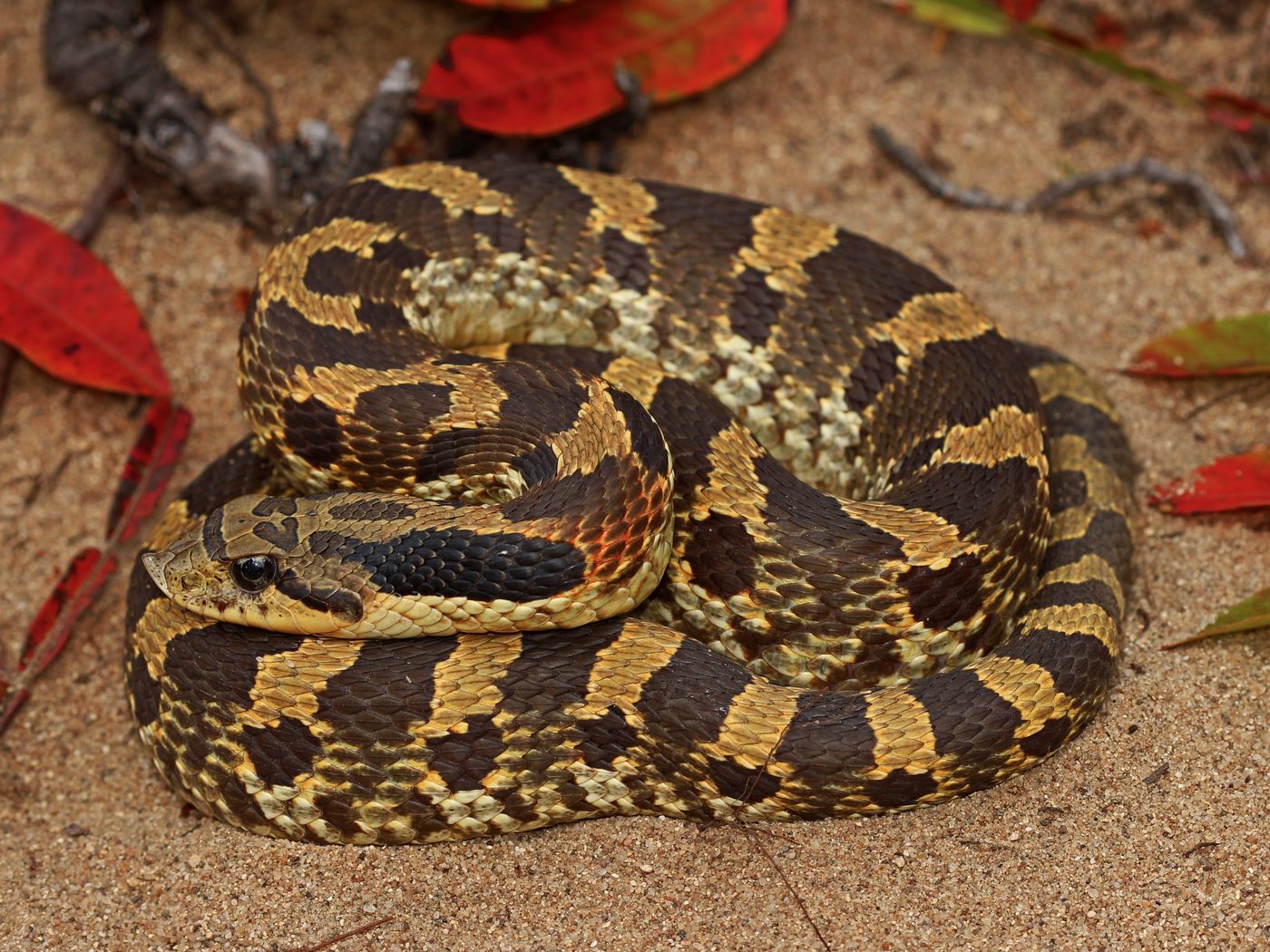
The death act has one flaw. Roll the snake right side up and it immediately rolls onto its back again, because a dead snake, in its view, belongs upside down.
Where to expect it.
One verified county record, on sandy or loose ground.
Active Season
Too few county records to chart. This is the species’ typical season, from TWRA.
What it gets mistaken for.
The performance is the problem. A hooded, hissing, striking snake gets killed as a viper by people acting in what they believe is self-defense.
A copperhead goes still and silent. Anything hooding, hissing loudly and striking with a closed mouth is not one. The upturned snout settles it.
No rattle, no black tail, and an upturned snout.
Nearly black hognoses occur. A racer has no upturned snout, a smaller head and smooth scales.
When you meet one.
It is loud, theatrical and completely harmless. Bites on people are rare and the snake has to be provoked into one.
Stand still and enjoy it.
This is the best defensive display in Tennessee and it costs the snake a lot of energy. Back off a few feet and let it stand down.
Walk away.
It will stay limp, mouth open, tongue out, until it decides you have gone. Standing over it just extends the act.
Name the snout.
The upturned snout is unmistakable and no venomous snake in Tennessee has one.
Submit it.
One verified record in the county. A second one is genuinely useful.
Pack it. Print it. Pass it on.
Most snakes killed in Williamson County are killed by someone who could not name them. Send this to anyone who gardens, hikes, keeps a woodpile, walks a dog off the greenway, or has a teenager who reaches into things. That is most of the county.
Sources
Medical disclaimer. This field guide is general educational information, not medical advice, and is no substitute for professional diagnosis or treatment. Any bite from a copperhead or a timber rattlesnake is a medical emergency: go to an emergency department, and call the Tennessee Poison Center at 1-800-222-1222 on the way. In an emergency, call 911. Identification disclaimer. No photograph identifies a snake with certainty, and this guide will not make anyone a herpetologist. When the answer matters, keep your distance and send a photograph to someone who does this for a living.