Smooth Earthsnake
Identification
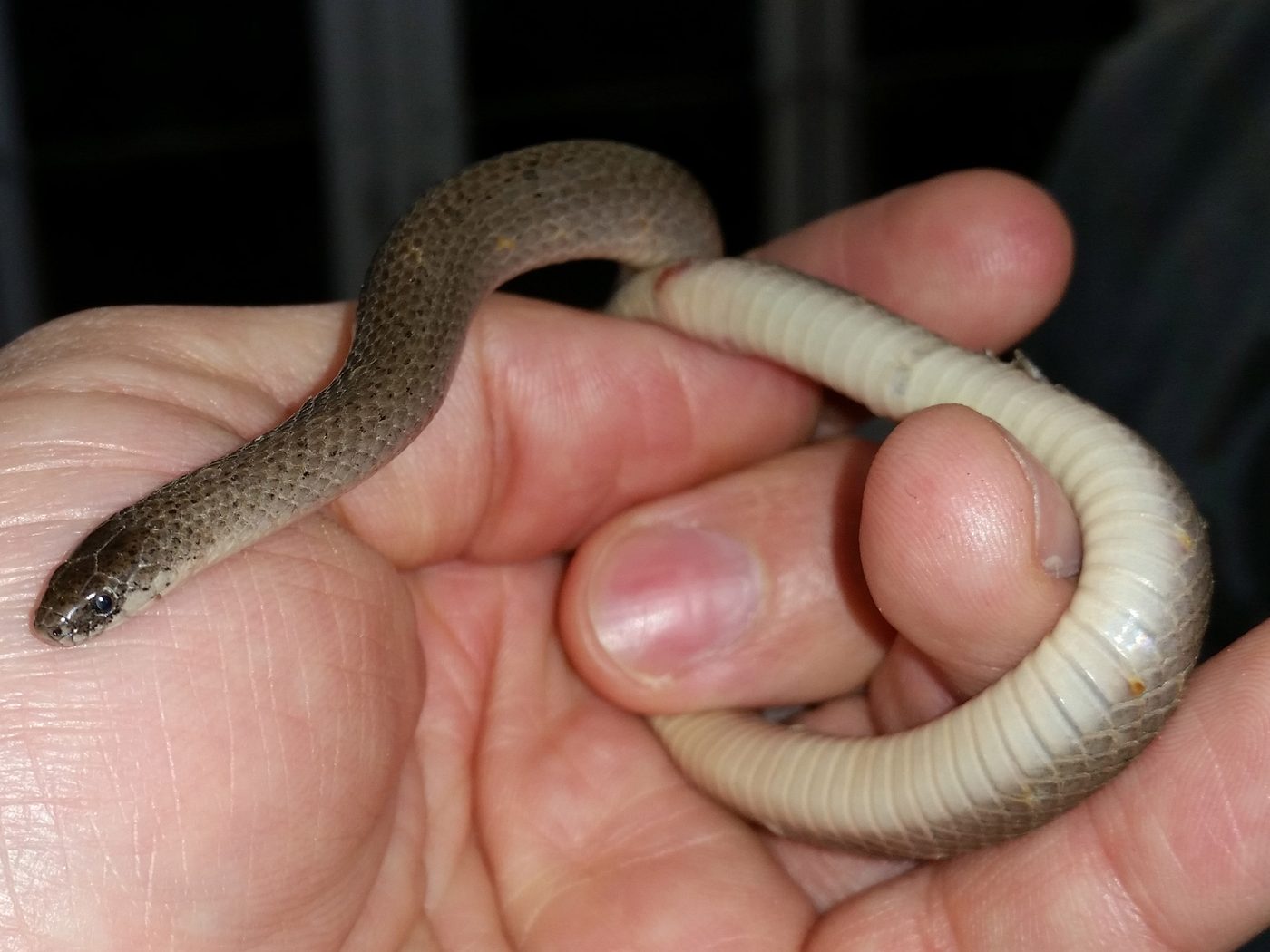
A plain, pencil-length snake that spends its life under things. Almost every county record starts with someone lifting a landscape stone, a tarp or a sheet of plywood behind the shed.
TWRA notes that domestic cats take this species regularly, and what that population cost adds up to is unknown. A cat with outdoor access in a wooded Williamson County subdivision is working through earthsnakes whether anyone sees it or not.
Where to expect it.
County-wide under cover, and essentially never in the open.
Active Season
Charted from this species’ own research-grade records inside Williamson County.
What it gets mistaken for.
It gets called a baby copperhead, which it cannot be: newborn copperheads are already six times its bulk and carry crossbands and a yellow tail.
Strongly keeled scales and five upper lip scales instead of six. TWRA confines it to a few counties in the state's southwestern corner.
The brownsnake has two rows of dark spots down the back and no loreal scale.
The wormsnake has a sharply contrasting pink belly and an iridescent sheen. The earthsnake's belly is plain cream.
When you meet one.
Nothing happens. It is too small to bite meaningfully and it does not try.
Put the stone back.
Set it down the way it was. That gap between rock and soil is the animal's entire climate control.
Leave the bed alone.
A mulch bed with earthsnakes in it is also a mulch bed with fewer slugs in it.
Warm, dark box, then a rehabilitator.
Cat-caught reptiles die of infection days later even when they look unhurt. Do not simply put it back outside.
Check the size.
A newborn copperhead is eight to ten inches of thick, banded snake with a bright yellow tail. This is a smooth, plain thing the width of a pencil.
Pack it. Print it. Pass it on.
Most snakes killed in Williamson County are killed by someone who could not name them. Send this to anyone who gardens, hikes, keeps a woodpile, walks a dog off the greenway, or has a teenager who reaches into things. That is most of the county.
Sources
Medical disclaimer. This field guide is general educational information, not medical advice, and is no substitute for professional diagnosis or treatment. Any bite from a copperhead or a timber rattlesnake is a medical emergency: go to an emergency department, and call the Tennessee Poison Center at 1-800-222-1222 on the way. In an emergency, call 911. Identification disclaimer. No photograph identifies a snake with certainty, and this guide will not make anyone a herpetologist. When the answer matters, keep your distance and send a photograph to someone who does this for a living.