Common Ribbonsnake
Identification
A gartersnake drawn thinner and given a much longer tail. TWRA puts it in West Tennessee and a handful of Highland Rim counties in southern and western Middle Tennessee, which makes western Williamson County the edge of its range.
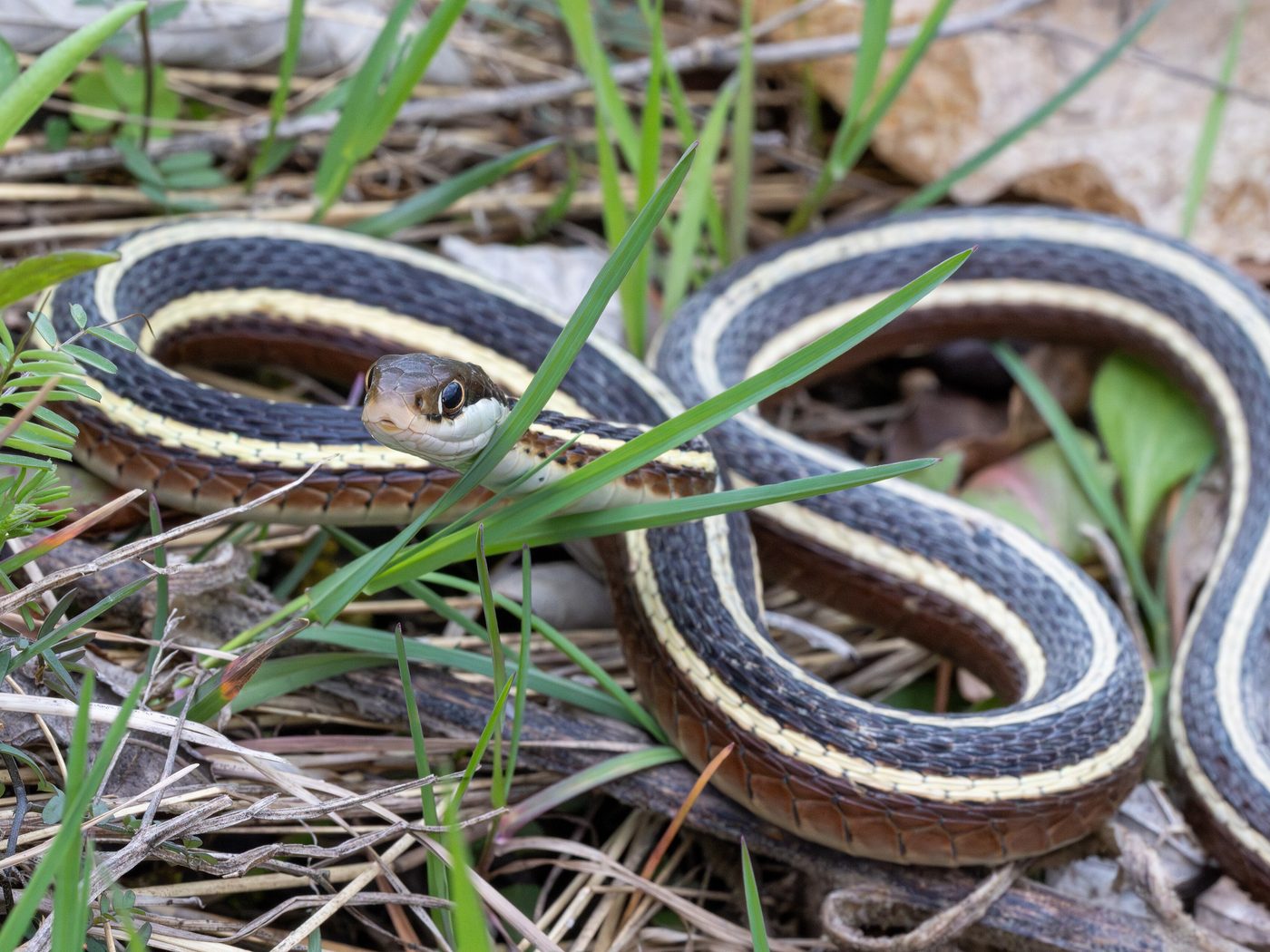
Five records in the county is a number worth treating as an invitation rather than a fact. Ribbonsnakes get filed as gartersnakes by observers who never looked at the tail, and the true count out along the western creeks is probably higher than this list can show.
Where to expect it.
Wet margins on the western side of the county, at the edge of the species' mapped range.
Active Season
Too few county records to chart. This is the species’ typical season, from TWRA.
What it gets mistaken for.
Two striped snakes, and the difference is the tail and the stripe row.
A gartersnake has black markings on the lower jaw and side stripes one row lower, on rows two and three. It is also stockier, with a tail nothing like a third of its length.
Bright head spots that touch each other. On the eastern species they stay separate.
When you meet one.
It goes into the water at speed and does not come back while you are standing there.
Photograph the tail.
Get the whole animal in frame if you can. Tail proportion is what separates this record from another gartersnake.
Upload it.
County records for this species are thin enough that one good observation measurably improves the map.
Expect musk.
Same defense as a gartersnake, same smell, same total absence of danger.
Release at the edge.
Put it back where the cover is, not on open lawn.
Pack it. Print it. Pass it on.
Most snakes killed in Williamson County are killed by someone who could not name them. Send this to anyone who gardens, hikes, keeps a woodpile, walks a dog off the greenway, or has a teenager who reaches into things. That is most of the county.
Sources
Medical disclaimer. This field guide is general educational information, not medical advice, and is no substitute for professional diagnosis or treatment. Any bite from a copperhead or a timber rattlesnake is a medical emergency: go to an emergency department, and call the Tennessee Poison Center at 1-800-222-1222 on the way. In an emergency, call 911. Identification disclaimer. No photograph identifies a snake with certainty, and this guide will not make anyone a herpetologist. When the answer matters, keep your distance and send a photograph to someone who does this for a living.