Red-bellied Snake
Identification
Two verified county records, which says more about how hard this snake is to find than about how many of them are out there. TWRA calls it locally common in some places and absent from others, with no obvious reason for the difference. Turn one over and the question is settled instantly: nothing else this size here has a plain red belly.
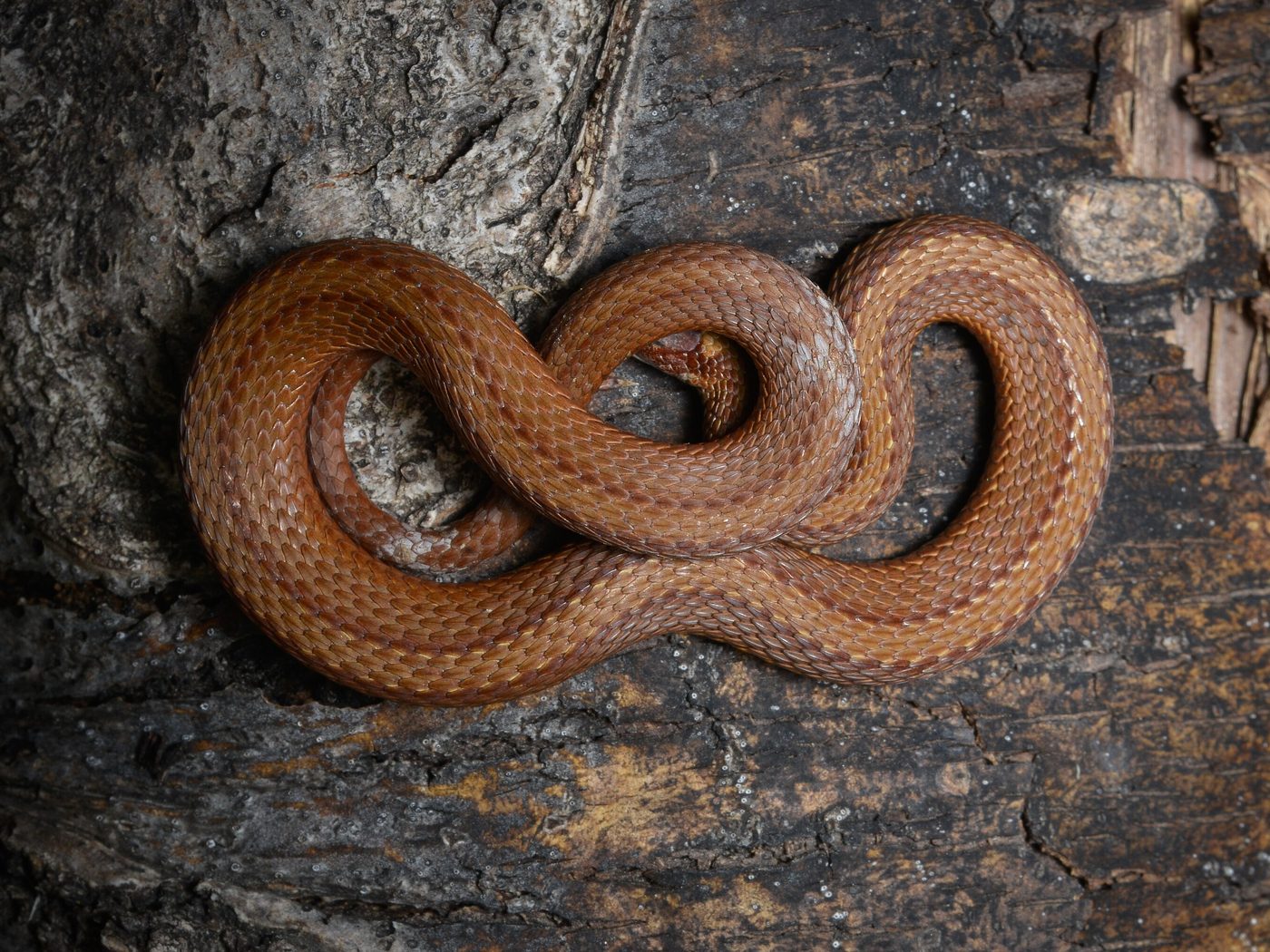
Lip-curling is real enough to have its own paper in the Journal of Zoology, which concluded the display probably works on prey and predators both. Whatever it is for, it is aimed at something much smaller than a person.
Where to expect it.
Moist woodland, especially near wetland and bottomland.
Active Season
Too few county records to chart. This is the species’ typical season, from TWRA.
What it gets mistaken for.
Turn it over. It is the only small brown snake here with a plain red underside.
Belly yellowish, tan or pink with small black dots along the sides, and two rows of dark spots on the back.
A three-foot animal whose red belly is not plain, with the dark back color creeping over the edge.
A black cap and a black band behind a pale neck collar, and smooth scales. Not yet recorded in this county, but the range covers it.
When you meet one.
It curls its upper lip back to bare a row of tiny teeth, a display with its own peer-reviewed literature. Pushed further it flattens, mimics a viper's posture, and finally plays dead. It does not bite.
Leave it.
It eats slugs and snails and does nothing else of consequence to a garden.
Photograph the belly.
With two county records on the board, a clear photograph of the underside is worth submitting.
Do not hold it long.
A snake this small loses heat and moisture quickly. Look, photograph, put it back under cover.
Leave a corner unraked.
A patch of leaf litter at the back of a lot is the habitat, and it costs nothing to keep.
Pack it. Print it. Pass it on.
Most snakes killed in Williamson County are killed by someone who could not name them. Send this to anyone who gardens, hikes, keeps a woodpile, walks a dog off the greenway, or has a teenager who reaches into things. That is most of the county.
Sources
Medical disclaimer. This field guide is general educational information, not medical advice, and is no substitute for professional diagnosis or treatment. Any bite from a copperhead or a timber rattlesnake is a medical emergency: go to an emergency department, and call the Tennessee Poison Center at 1-800-222-1222 on the way. In an emergency, call 911. Identification disclaimer. No photograph identifies a snake with certainty, and this guide will not make anyone a herpetologist. When the answer matters, keep your distance and send a photograph to someone who does this for a living.