Western Blacklegged Tick
Identification
The Pacific equivalent of the eastern blacklegged tick. Carries Lyme disease on the West Coast, though population pressure is lower thanks to one local species: the western fence lizard.
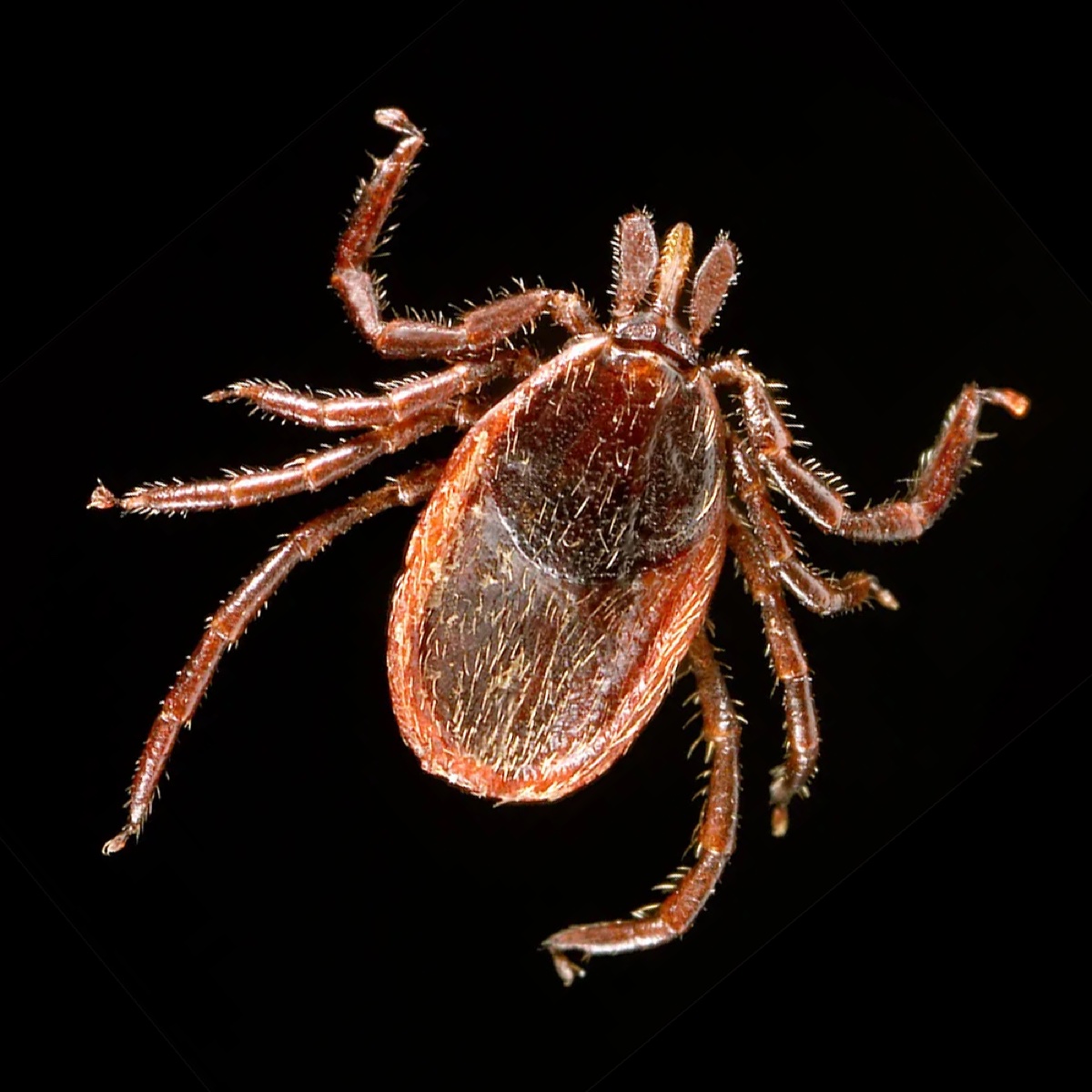
Mild Pacific winters mean adult activity peaks in the cool months. The dry summer is the safest hiking window. Plan trips by season as well as by destination.
Where to find it.
The Pacific Coast from Baja California through British Columbia. Densest in northern California, Oregon, and coastal Washington.
Distribution Map
Source · CDC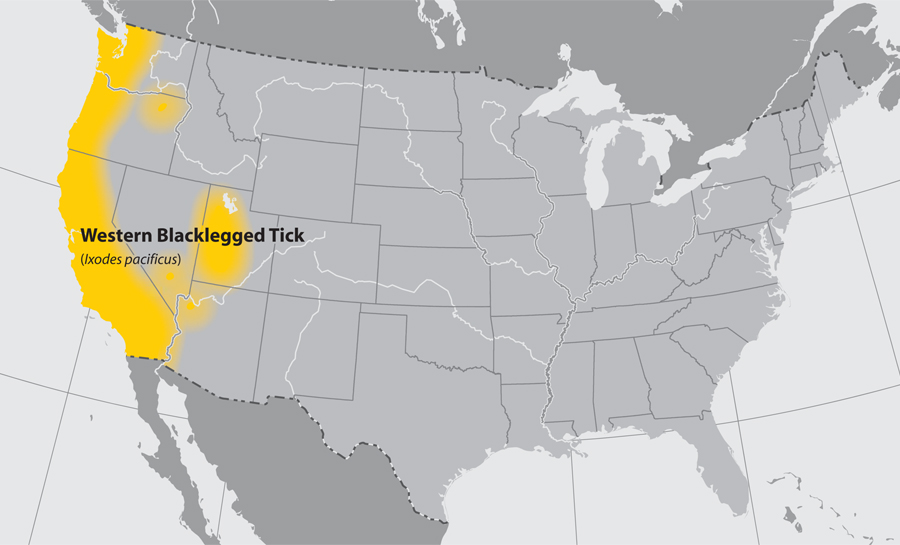
Active Season
When this species is questing for hosts. Peak months in red are the highest-risk windows.
If it bit you.
A bite from this species carries a specific set of risks. The timeline below tells you what to watch for and when to act.
Lyme prevalence in Western blacklegged populations is lower than in the East because juvenile ticks often feed on fence lizards, whose blood kills the Lyme bacterium. Where lizards are absent, risk climbs.
Remove and document.
Lyme transmission risk increases sharply after 24 hours of attachment. Early removal prevents most infections.
EM rash window.
Same expanding bullseye as eastern Lyme. Photograph it. Photograph it before it fades.
Flu-like symptoms.
Fever, fatigue, joint pain without respiratory symptoms. Anaplasmosis is more common than Lyme in some Western populations.
Late presentations.
Joint swelling, facial nerve palsy, irregular heartbeat. Treatable but easier to address sooner than later.
Diseases This Species Carries
For the general post-bite protocol, visit the Bitten page.
Gear for western blacklegged tick country.
The four products that matter most when this species is the one you are likely to encounter.

Permethrin Spray
Essential for redwood and oak woodland hiking. Treat pants, gaiters, and pack.
Shop →
Wondercide Insect Repellent
For long, mild-climate days. Spray skin and clothing and reapply through the hike.
Shop →
Fine-Tip Tweezers
Pacific nymphs are as small as Eastern nymphs. Same precision required.
Shop →
Tick Testing Kit
Mail-in testing for Borrelia is especially useful here because Lyme prevalence varies widely by county.
Shop →Pack it. Print it. Pass it on.
The most-affected people are the least-informed. Forward this guide to anyone who hikes, hunts, gardens, owns a dog, has a child, or lives east of the Rockies. That covers most of the country.
Trusted Sources
Medical disclaimer. This field guide is general educational information, not medical advice, and is not a substitute for professional diagnosis or treatment. Tick-borne illness can be serious. If you develop a rash, fever, aches, or other symptoms after a bite, or if you are unsure, contact a healthcare provider promptly. In an emergency, call 911. Affiliate disclosure. Some product links in this guide are affiliate links; we may earn a small commission at no additional cost to you.