Rocky Mountain Wood Tick
Identification
The mountain cousin of the American dog tick. Nearly identical in appearance and disease profile, separated mainly by geography. Also the species most associated with tick paralysis in children.
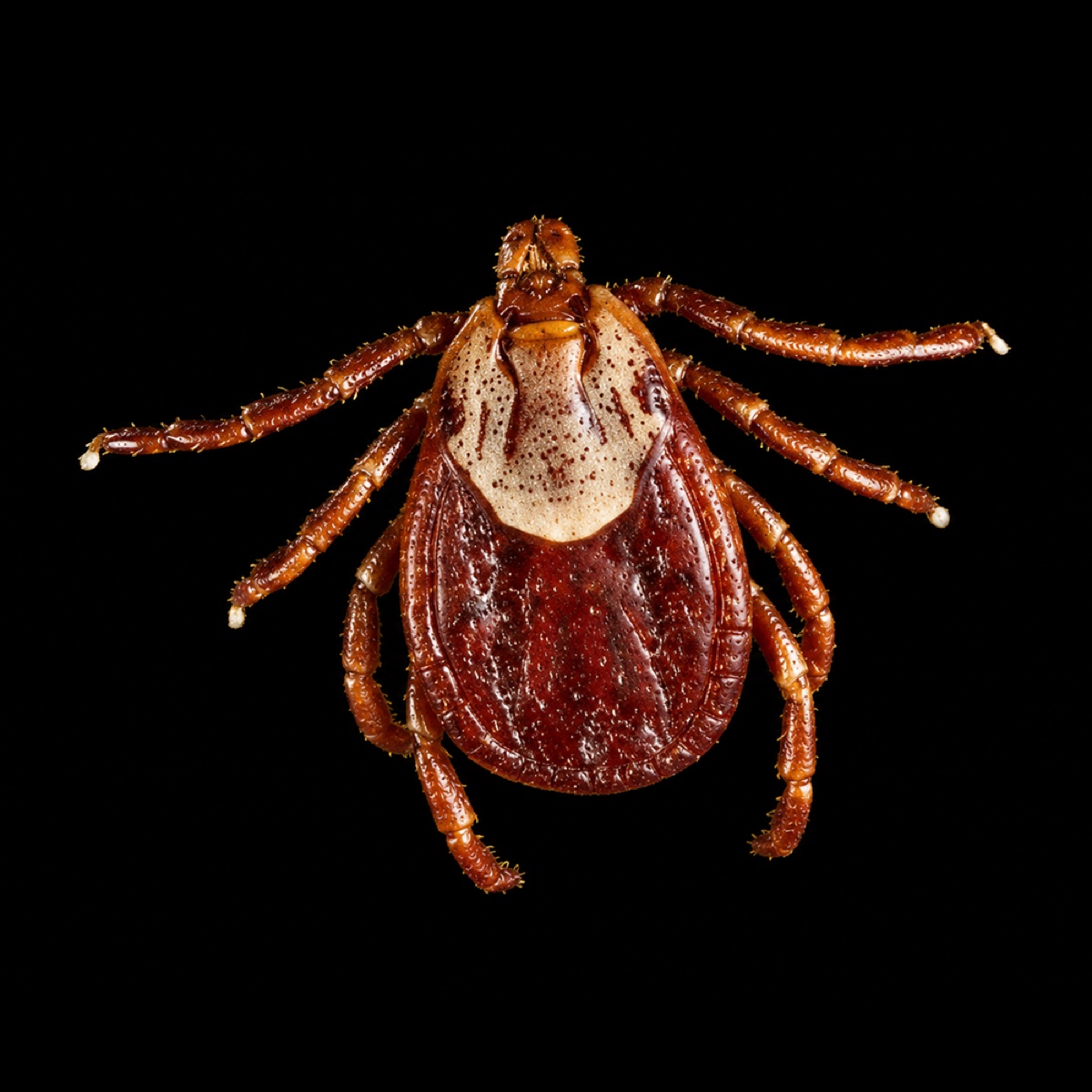
Tick paralysis is a rare but real risk. A toxin in the female's saliva causes ascending paralysis in children. Remove the tick and the paralysis reverses within hours. Miss it and the diagnosis can be missed entirely.
Where to find it.
The Rocky Mountain states from elevations of 4,000 to 10,000 feet. Extends into southwestern Canada and parts of the Great Basin.
Distribution Map
Source · CDC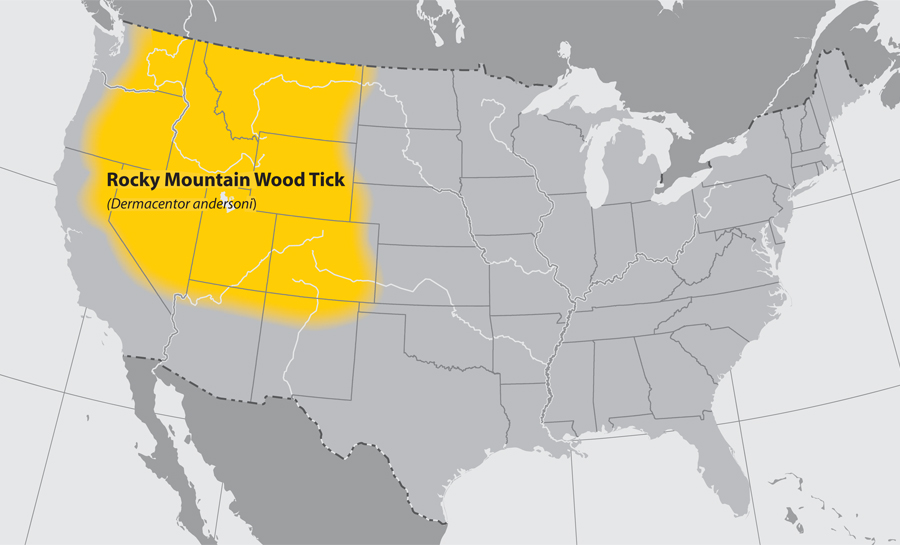
Active Season
When this species is questing for hosts. Peak months in red are the highest-risk windows.
If it bit you.
A bite from this species carries a specific set of risks. The timeline below tells you what to watch for and when to act.
Colorado tick fever is the other concern. Less deadly than RMSF, but distinctive: fever that breaks for a few days and then returns. Tell your doctor where you hiked.
Remove and clean.
Standard removal protocol. Save the tick. Note the elevation and location of the encounter for the doctor.
Colorado tick fever onset.
Sudden fever, chills, headache, muscle pain. A second fever bout 2 to 3 days after the first is the diagnostic clue. Viral, not bacterial.
RMSF watch.
Same symptoms and treatment urgency as the American dog tick variant. Doxycycline within five days of fever onset.
Paralysis watch.
In children especially, an attached female can cause weakness starting in the legs and progressing upward. Find and remove the tick.
Diseases This Species Carries
For the general post-bite protocol, visit the Bitten page.
Gear for rocky mountain wood tick country.
The four products that matter most when this species is the one you are likely to encounter.

Permethrin Spray
Treat hiking pants, gaiters, and pack. Mountain wood ticks pick up from sagebrush at adult-leg height.
Shop →
Hiking Gaiters
Mountain terrain has more direct grass and brush contact than forested east. Gaiters between boot and pant close the gap.
Shop →
Tick Removal Kit
Backcountry kit with tweezers, magnification, alcohol wipes, and specimen container. Worth its weight on multi-day trips.
Shop →
Wondercide Insect Repellent
Layers cleanly under sunscreen and does not degrade the synthetic fabrics in mountain gear, which DEET will. Reapply through the day.
Shop →Pack it. Print it. Pass it on.
The most-affected people are the least-informed. Forward this guide to anyone who hikes, hunts, gardens, owns a dog, has a child, or lives east of the Rockies. That covers most of the country.
Trusted Sources
Medical disclaimer. This field guide is general educational information, not medical advice, and is not a substitute for professional diagnosis or treatment. Tick-borne illness can be serious. If you develop a rash, fever, aches, or other symptoms after a bite, or if you are unsure, contact a healthcare provider promptly. In an emergency, call 911. Affiliate disclosure. Some product links in this guide are affiliate links; we may earn a small commission at no additional cost to you.