Gulf Coast Tick
Identification
A close cousin of the lone star, with ornate silver markings on a darker body. Carries a milder version of spotted fever, but one with a unique clinical signature: a dark, scabbed crater at the bite site.
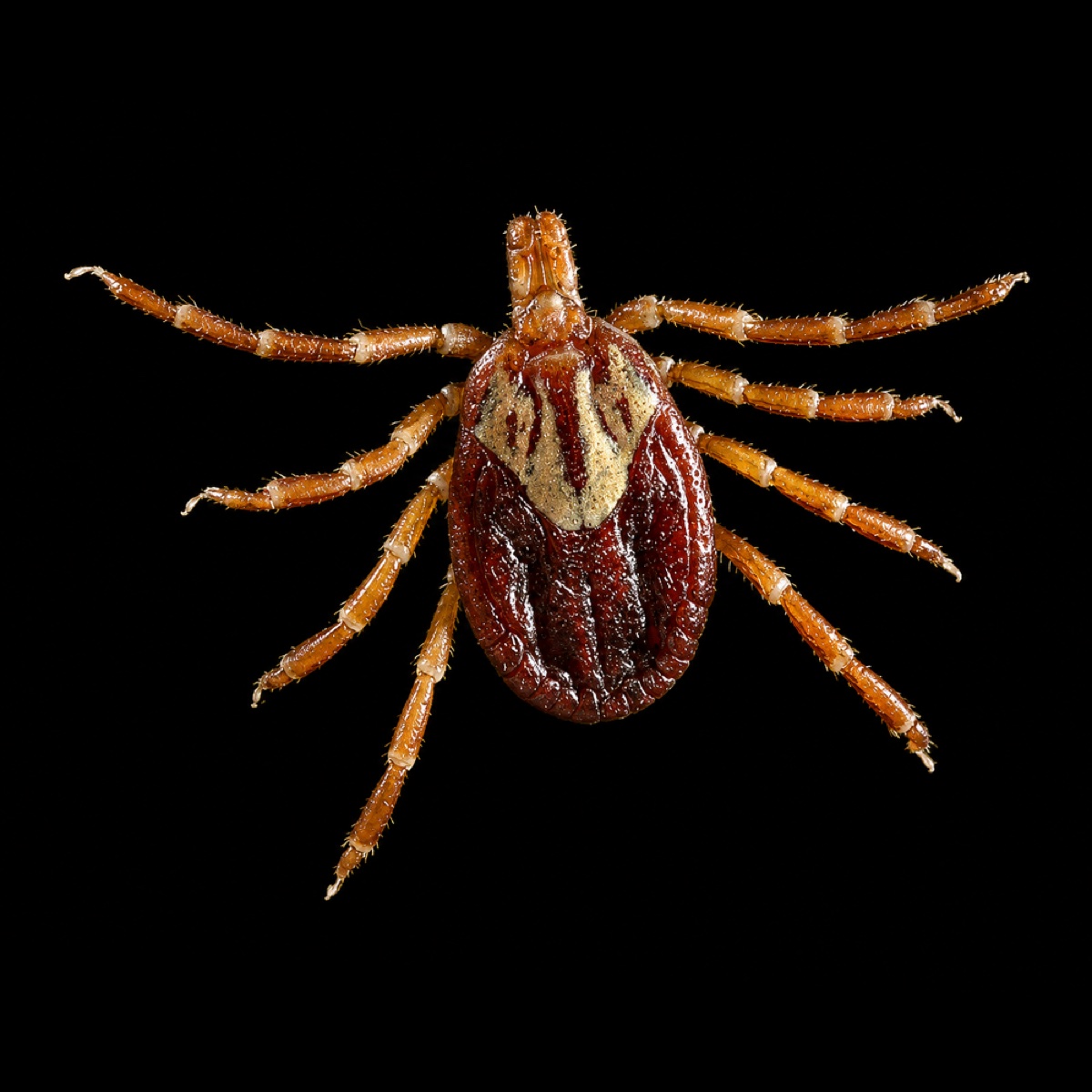
Rickettsia parkeri produces a milder spotted fever than the Rocky Mountain version. The hallmark sign is an eschar: a dark, scabbed crater at the bite site. If you find one, photograph it. Show it to your doctor.
Where to find it.
The Gulf and Atlantic coasts from Texas through North Carolina, with inland spread through Oklahoma, Kansas, and into the Midwest.
Distribution Map
Source · CDC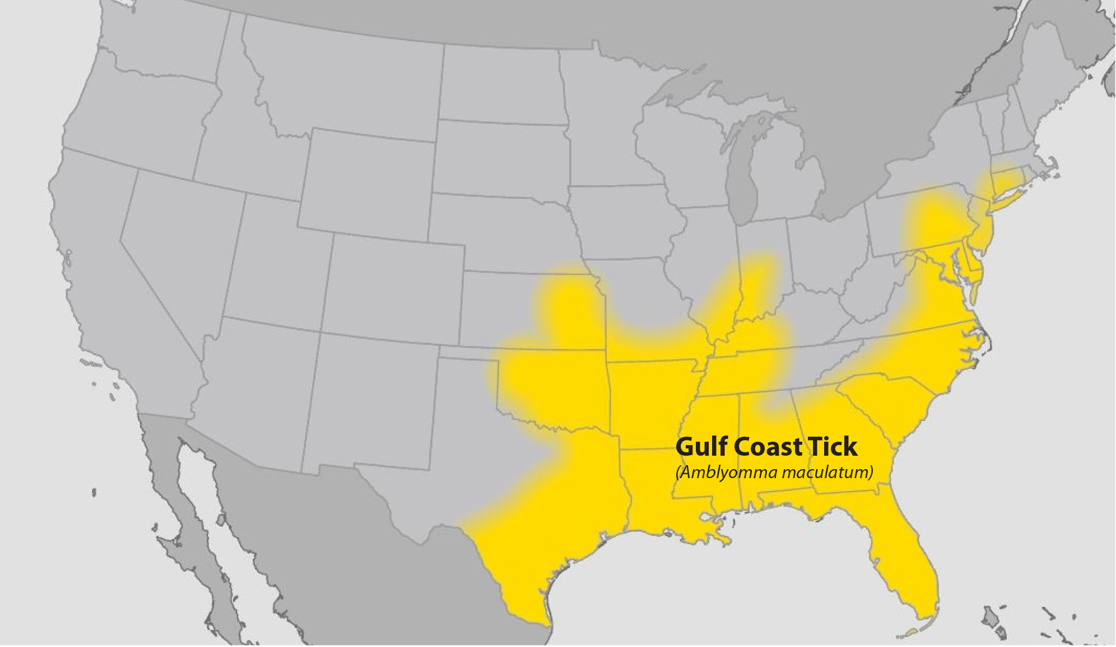
Active Season
When this species is questing for hosts. Peak months in red are the highest-risk windows.
If it bit you.
A bite from this species carries a specific set of risks. The timeline below tells you what to watch for and when to act.
The eschar is the diagnostic feature. A dark scab over a small ulcer at the bite site, present in nearly all Rickettsia parkeri cases. Photograph it before showing your doctor.
Remove and clean.
Standard removal. The Gulf Coast tick is large enough to be obvious and easy to grip with tweezers.
Eschar formation.
A small painless ulcer with a dark crusted center develops at the bite site. This is the strongest diagnostic clue.
Fever and rash.
Mild to moderate fever, headache, muscle aches, and a spotted rash on trunk and extremities. Doxycycline resolves quickly.
Most cases resolve.
Rickettsia parkeri is rarely fatal and responds well to antibiotics. Treatment is straightforward when caught.
Diseases This Species Carries
For the general post-bite protocol, visit the Bitten page.
Gear for gulf coast tick country.
The four products that matter most when this species is the one you are likely to encounter.

Permethrin Spray
Coastal hunting and birding gear should be treated. The Gulf Coast tick is large but active.
Shop →
Hiking Gaiters
Tall coastal grass means constant leg contact. Gaiters close the gap between boot and pant.
Shop →
Wondercide Insect Repellent
For tall-grass coastal hiking and hunting. Reapply through the day and after sweating.
Shop →
Tick Key
The larger body of the Gulf Coast tick is well-suited to the key tool, which pulls cleanly without rupturing.
Shop →Pack it. Print it. Pass it on.
The most-affected people are the least-informed. Forward this guide to anyone who hikes, hunts, gardens, owns a dog, has a child, or lives east of the Rockies. That covers most of the country.
Trusted Sources
Medical disclaimer. This field guide is general educational information, not medical advice, and is not a substitute for professional diagnosis or treatment. Tick-borne illness can be serious. If you develop a rash, fever, aches, or other symptoms after a bite, or if you are unsure, contact a healthcare provider promptly. In an emergency, call 911. Affiliate disclosure. Some product links in this guide are affiliate links; we may earn a small commission at no additional cost to you.