Brown Dog Tick
Identification
The only American tick that completes its life cycle indoors. It does not need a season. It needs a dog and a baseboard. Once established in a home, populations can persist for years.
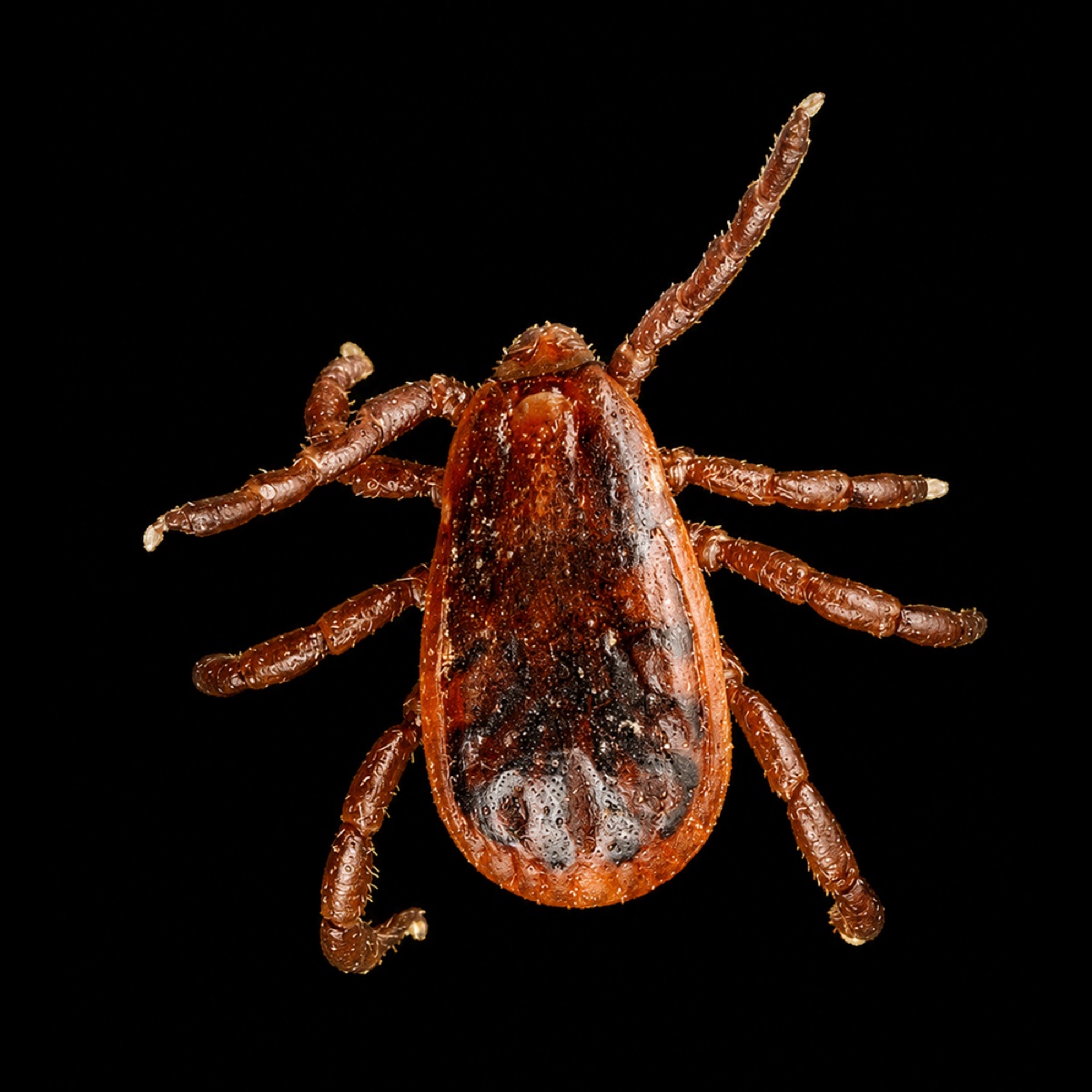
Most ticks die without a host in a few months. The brown dog tick can persist in a house for years between meals. Treating the dog is not enough. The house must be treated too.
Where to find it.
Every state in the lower forty-eight. Worldwide. Not bound to a regional climate because it thrives indoors.
Distribution Map
Source · CDC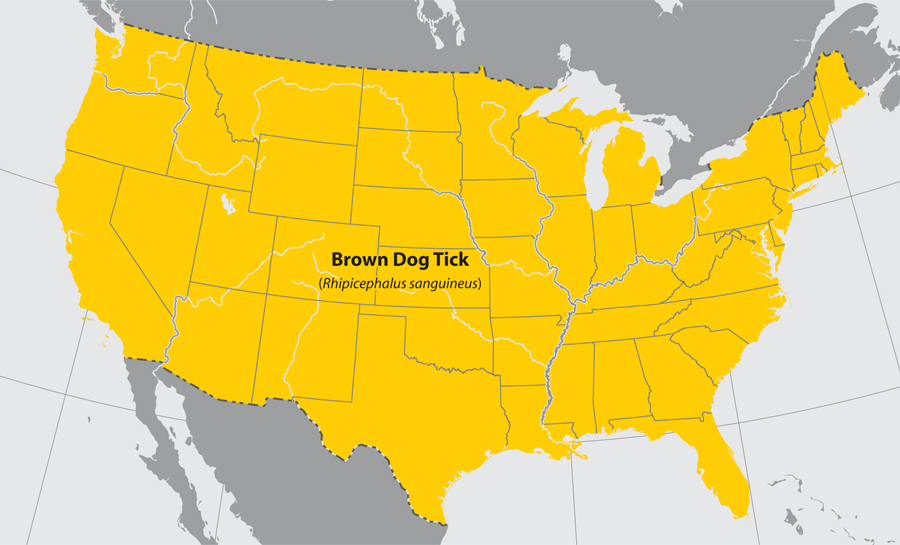
Active Season
When this species is questing for hosts. Peak months in red are the highest-risk windows.
If it bit you.
A bite from this species carries a specific set of risks. The timeline below tells you what to watch for and when to act.
If you find one brown dog tick indoors, you have an infestation, not an incident. Treat the dog, the house, and any soft furniture the dog uses, in that order, all at once.
Remove and inspect.
Brown dog ticks rarely bite humans, but when they do, the bite carries the same RMSF risk as the American dog tick.
Inspect the dog.
Check ears, between toes, armpits, groin. Engorged ticks look like raisins or skin tags. The dog will not always scratch.
Inspect the house.
Vacuum aggressively. Check baseboards, cracks, the dog bed. Eggs are often laid in elevated locations like ceiling corners.
Repeat treatment.
A second round of indoor pesticide is necessary to catch newly hatched ticks that survived the first treatment.
Diseases This Species Carries
For the general post-bite protocol, visit the Bitten page.
Gear for brown dog tick country.
The four products that matter most when this species is the one you are likely to encounter.

Wondercide Flea & Tick Collar
Brown dog tick populations explode in a house with an untreated dog. The collar repels for up to four months.
Shop →
Wondercide Indoor Pest Control
Treat baseboards, cracks, dog bedding, and corners. Plant-powered, so it is safe to spray indoors around kids and pets where brown dog ticks hide.
Shop →
Lint Roller
A standard lint roller catches crawling ticks before they attach to skin or fabric. Roll over your pant legs after grooming the dog.
Shop →
Fine-Tip Tweezers
The brown dog tick is narrow and grips tightly. Precision tweezers prevent body rupture during removal.
Shop →Pack it. Print it. Pass it on.
The most-affected people are the least-informed. Forward this guide to anyone who hikes, hunts, gardens, owns a dog, has a child, or lives east of the Rockies. That covers most of the country.
Trusted Sources
Medical disclaimer. This field guide is general educational information, not medical advice, and is not a substitute for professional diagnosis or treatment. Tick-borne illness can be serious. If you develop a rash, fever, aches, or other symptoms after a bite, or if you are unsure, contact a healthcare provider promptly. In an emergency, call 911. Affiliate disclosure. Some product links in this guide are affiliate links; we may earn a small commission at no additional cost to you.